War and the Dreamworld by Ipek S. Burnett

Death anxiety. These words were on my lips as I emerged from the dream. Was it a lay interpretation? An existential explanation offered by my returning consciousness? A consolation, like wiping the brow of a child at night, whispering, “It was just a nightmare”? An attempt to convince myself that the dream signaled a common, if repressed, fear?

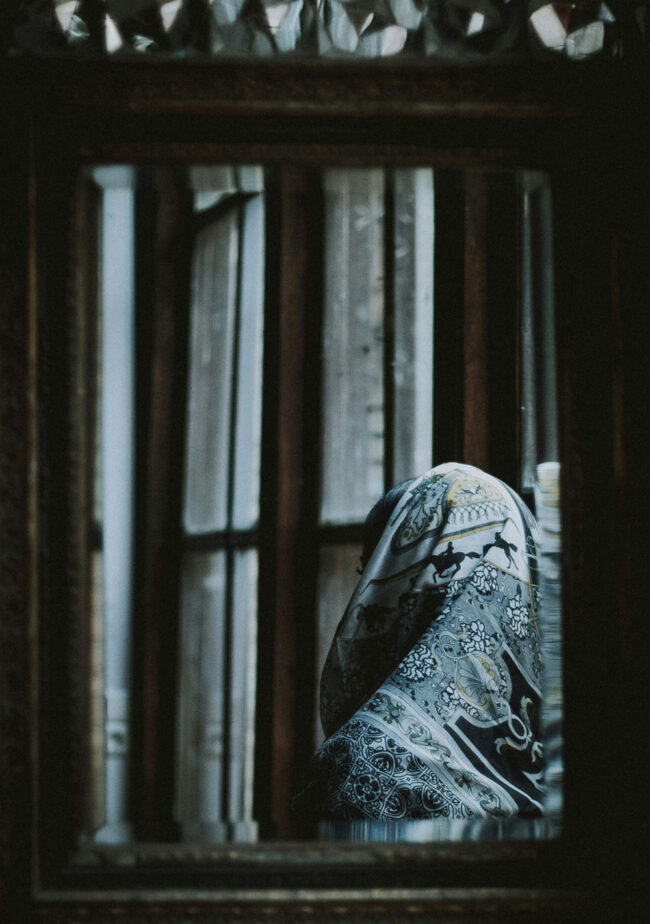
Photo by Paaz PG

Living Wisdom International High School — Afghanistan Program

At the heart of EFL is a single, luminous idea: The overarching goal of the system is to help each student develop maturity—defined as “the ability to relate appropriately to realities other than one’s own.” And from that maturity flows something even more precious: true success, defined as the ability to face life’s challenges with joy, wisdom, and inner strength—creating a life that is both personally fulfilling and beneficial to others.

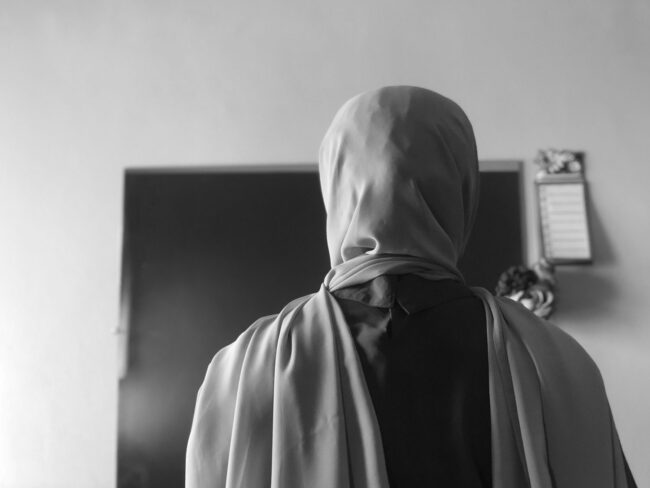
Photo by Mahmoud Hamdi

The Journey from the First Afghan Student to the First Afghan Teacher at Living Wisdom

It was January 2023. Life in Afghanistan had become unbearably difficult for girls. For us, education was not just about books or classrooms. It was our only path to freedom, to dreams, to proving to our community that we too could build our country alongside our brothers. For me, school was more than a building; it was a sanctuary of hope. I dreamed of becoming a doctor, of healing the sick and giving families a reason to believe in tomorrow.

The Shared Language of Unmaking by Kanika Mehrotra

Long before psychoanalytic language existed, voices from the Indian subcontinent sang of surrender in both ordinary and extraordinary ways. Kabir, a fifteenth-century poet-saint, along with other Sufi-Bhakti mystics, moved through streets, riversides, and marketplaces, composing verses that challenged authority, hierarchy, and rigid forms of identity. Their practice was embodied in song, rhythm, and dance, moving toward freedom, encounter, and transformation and away from doctrinal certainty.

Between Worlds: A Chinese Analyst’s Journey by Xiaomeng Qiao

“Why do you Chinese need psychoanalysis?” The question came from my instructor at the Chicago Institute, delivered not with malice but with genuine curiosity. “Don’t you have Buddhism, Taoism, all these ways to regulate mental health?” I remember the silence that followed. The other Chinese trainees and I exchanged glances across the Zoom screen—yes, we were among the first to train remotely, Chicago being notorious for its large Chinese population. The question hung in the virtual air like smoke, and I found myself nodding slowly, thinking: He’s right. He’s absolutely right.

Overwriting Caste: From the Margins of the Mystic Writing Pad by Bia Roy

The complexity of the patient-analyst dyad increases when the two have different cultural backgrounds. I am an analyst-in-training who has worked and lived in many contexts, in Japan and the UK. In Japan, I have lived as a third-generation Zainichi Korean. Zainichi refers to Korean immigrants or their descendants (in Japanese, 在zai means “present” and 日nichi means “Japan”). Japan adopts jus sanguinis: Nationality and citizenship are determined by one’s parental heritage, not the country of birth (jus soli). In addition, one cannot hold dual citizenship. After Japan colonised Korea in 1910, Koreans were forced to become Japanese.

Being Zainichi by Atsumi Minamisawa

The complexity of the patient-analyst dyad increases when the two have different cultural backgrounds. I am an analyst-in-training who has worked and lived in many contexts, in Japan and the UK. In Japan, I have lived as a third-generation Zainichi Korean. Zainichi refers to Korean immigrants or their descendants (in Japanese, 在zai means “present” and 日nichi means “Japan”). Japan adopts jus sanguinis: Nationality and citizenship are determined by one’s parental heritage, not the country of birth (jus soli). In addition, one cannot hold dual citizenship. After Japan colonised Korea in 1910, Koreans were forced to become Japanese.

Victims of a Commodified Society by David Morgan

On 28 July 2025, four people were killed in a mass shooting in their Park Avenue office tower in central Manhattan. Among the victims were Wesley LePatner, a senior executive at Blackstone and a mother of two, and Didarul Islam, an off-duty police officer working in private security who served as a building guard and management employee. The gunman, Shane Devon Tamura, aged twenty-seven, ended his own life after the attack. Like so many similar incidents, this was not merely another chapter in the relentless American cycle of gun violence…It has now become, at least for this writer, a parable of what happens when people are reduced to functional market value and usage: a world where human beings come to see themselves, and are seen by others, as assets or failures, winners to be rewarded or discards to be forgotten.

The Silenced Voices by Naw Cheni Thein

have you seen an apocalypse not in a movie but on the streets outside your window have you smelled the air of a chaos tamed by the weapons of armed soldiers have you heard of the silenced screams of the medical workers who were also civilians amongst civilians have you tasted the blood of either of these two murderers—COVID and Coup

Starting from Ground Zero by Michiko Oki

When a postcard arrived from a friend, I was in my late teens, living in the passive-aggressive air of the bright grey sky in a tiny room in Kobe. The picture on the postcard was seemingly drawn hastily in a graffiti-like style in pale pastel colours. In it, a woman in pyjamas with dark, messy hair is sitting on a single bed, slightly hunched over and covering her mouth with her hands. She appears lost in thought, blankly bemused, as she stares at an open suitcase in front of her, waiting to be filled, with piles of books lying next to it. From her strangely impassive face, I heard an inaudible voice oozing out—“What shall I do?”

Wrecked by Megan K.D. Gordon

The Great Ocean Road, a single-lane ribbon at the top of sheer bluffs outside Melbourne in Australia, is called the Shipwreck Coast. It’s so named after the hundreds of boats that journeyed from Europe in the nineteenth century looking for safe harbor—and finding anything but. One hundred years later, my own family journeyed from America to Australia, looking for safe harbor. Though by the 1990s, Qantas and in-flight service had supplanted the clippers and barques that smashed into the cliffs so long ago.

Homesick, USA by Liam A. Faulkner

Grief has been on our minds lately, both my patient’s and mine. In addition to the anguish inherent in his transatlantic move and resultant “regressus ad uterum,” our work has also touched upon the grief we share with many of our fellow Americans at the loss of another home, another nurturing womb: that of the very country he grew up in and to which I moved.

Psychic Irredentism by Lucas McGranahan

This reflective piece traces a journey through Bulgaria and Albania, weaving together encounters with strangers, political history, and the inner experience of foreignness. Moving from monasteries and mountain villages to bustling Balkan cities, the essay explores how travel exposes the boundaries between self and world.

Splitting Genocide by Celeste Kelly

We can’t split something off when we’re surrounded by it. The same forces flattening Gaza are showing up here under different names—economic inequality, xenophobia, the rollback of human rights. I’m trying to bridge the divide between denial and collapse, to find ways of staying engaged without turning away.

My Home: Kidnappings in New York by Sonni Mun

My first day volunteering at immigration court began with a medical emergency. A man had collapsed in his wheelchair while DHS officers surrounded his terrified family. When I identified myself as a physician, they demanded proof before allowing me to help. In that moment, I understood what it meant to live in a country where mercy requires credentials—and where witnessing itself can feel like an act of resistance.