Victims of a Commodified Society by David Morgan

On 28 July 2025, four people were killed in a mass shooting in their Park Avenue office tower in central Manhattan. Among the victims were Wesley LePatner, a senior executive at Blackstone and a mother of two, and Didarul Islam, an off-duty police officer working in private security who served as a building guard and management employee. The gunman, Shane Devon Tamura, aged twenty-seven, ended his own life after the attack. Like so many similar incidents, this was not merely another chapter in the relentless American cycle of gun violence…It has now become, at least for this writer, a parable of what happens when people are reduced to functional market value and usage: a world where human beings come to see themselves, and are seen by others, as assets or failures, winners to be rewarded or discards to be forgotten.

The Silenced Voices by Naw Cheni Thein

have you seen an apocalypse not in a movie but on the streets outside your window have you smelled the air of a chaos tamed by the weapons of armed soldiers have you heard of the silenced screams of the medical workers who were also civilians amongst civilians have you tasted the blood of either of these two murderers—COVID and Coup

Homesick, USA by Liam A. Faulkner

Grief has been on our minds lately, both my patient’s and mine. In addition to the anguish inherent in his transatlantic move and resultant “regressus ad uterum,” our work has also touched upon the grief we share with many of our fellow Americans at the loss of another home, another nurturing womb: that of the very country he grew up in and to which I moved.

Overwhelm by Hattie Myers

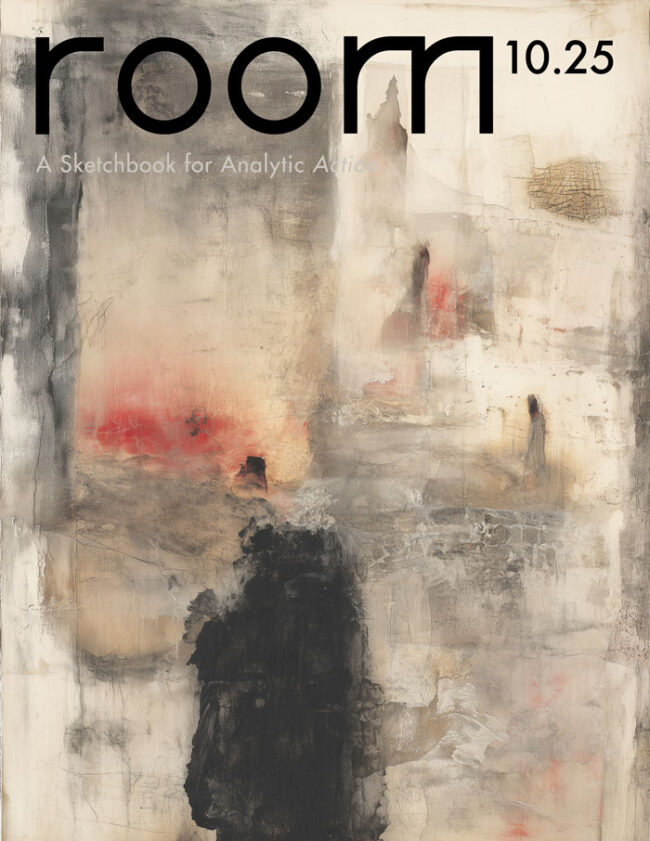
The essays in ROOM 10.25 are as raw and urgent as any we have received. Their authors hail from Sudan, Palestine, Israel, Croatia, and the US. They write about what it feels like to be living a split screen. They write about how we split words from context. They write from inside a refugee camp in Gaza and from inside the federal building in New York. 

Dreaming of Crimea by Oleksandra Kurbala

Every spring, my mother dreamt of Crimea, and that’s how we knew winter was ending. Now, exiled from those shores, I still dream of its herbs, its sea, its air. Eleven years have passed since I last returned. For those displaced by Russia’s war, the longing for Crimea is both memory and wound — a repetition of trauma that we carry within us, and around which, somehow, we grow.

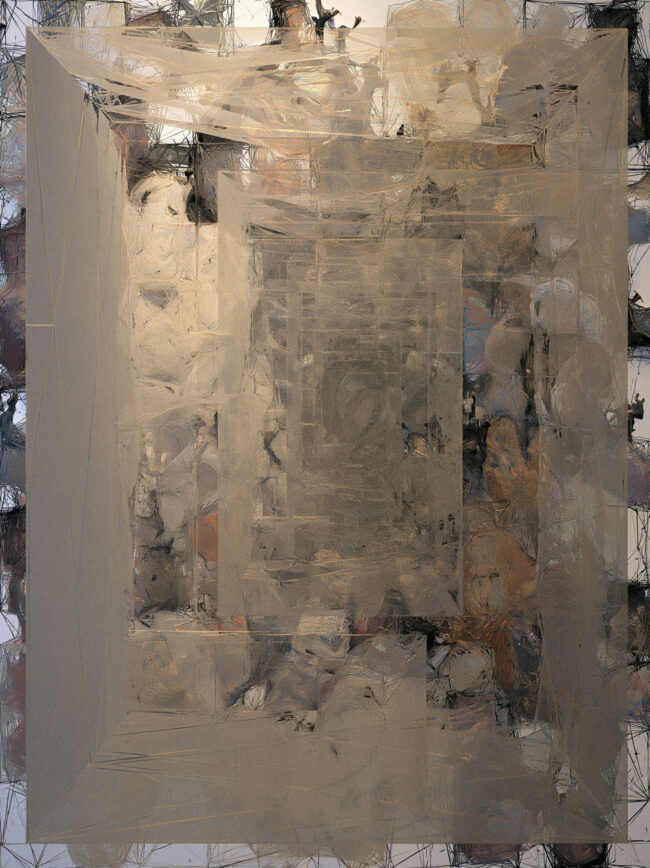
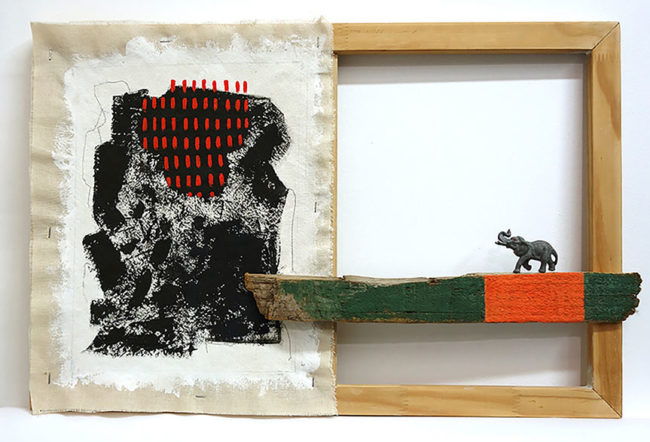
Construction 6 ©Liliana Zavaleta

Liliana Zavaleta

Liliana Zavaleta is a visual artist who was born in Lima, Perú. She grew up in the United States and has lived and studied in Europe, the Near East, and South America. Zavaleta obtained her university degrees in French and Latin American Literature. She also studied at Parsons School of Design and was an award-winning art director before dedicating herself to her art work. Today she works full-time on her two- and three-dimensional visual work, dividing her time between Upstate New York and South America.

Artwork by Wacomka /Shutterstock.com

BETWEEN TWO HOMES by Tuba Tokgoz

Just before arriving in New York as a graduate student, I was consumed by Harry Potter novels, which describe a boy seizing his chance at a life in an alternate universe with its own realities and its own customs and history. What is valued in the old world is not necessarily appreciated in the new world, and vice versa. Novels such as The Hobbit, His Dark Materials, Chronicles of Narnia, and Coraline, in which characters travel to imaginary worlds where time and reality flow differently, resonate with me, perhaps because moving to another country involves bold changes in every aspect of life—geography, climate, architecture, customs, language, and even time.

markus-spiske-UXY9XEOm_1g-unsplash

REASSEMBLING FRAGMENTS by Zak Mucha

When I was a little kid, I thought my uncle was hysterical. He told no jokes, but he didn’t treat me like a kid, either. He was always a problem for the rest of the family. At one point, my mother told me, “If people in suits come looking for your uncle, you don’t know where he lives.” Actually, he lived down the block. My uncle always had a job but never seemed to be working.