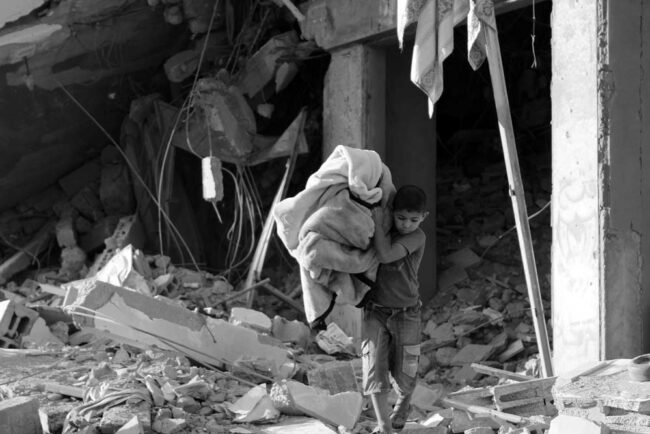
Splitting Genocide by Celeste Kelly

We can’t split something off when we’re surrounded by it. The same forces flattening Gaza are showing up here under different names—economic inequality, xenophobia, the rollback of human rights. I’m trying to bridge the divide between denial and collapse, to find ways of staying engaged without turning away.
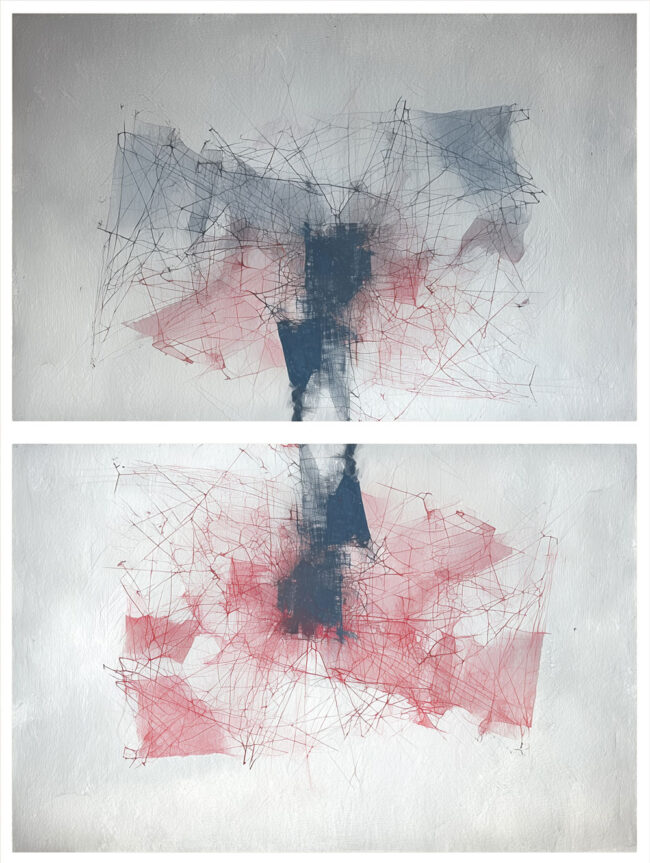
Mothering Through Genocide by Helena Vissing and Heba Al-Turk

This is a letter exchange between two mothers — one living in Gaza, one in safety — writing across war and impossible distance. It captures the collapse of the clinical frame, the limits of Western psychology, and the power of maternal love as resistance. In the rubble of theory, what remains is the raw work of witnessing — naming, refusing erasure, and holding one another through words.

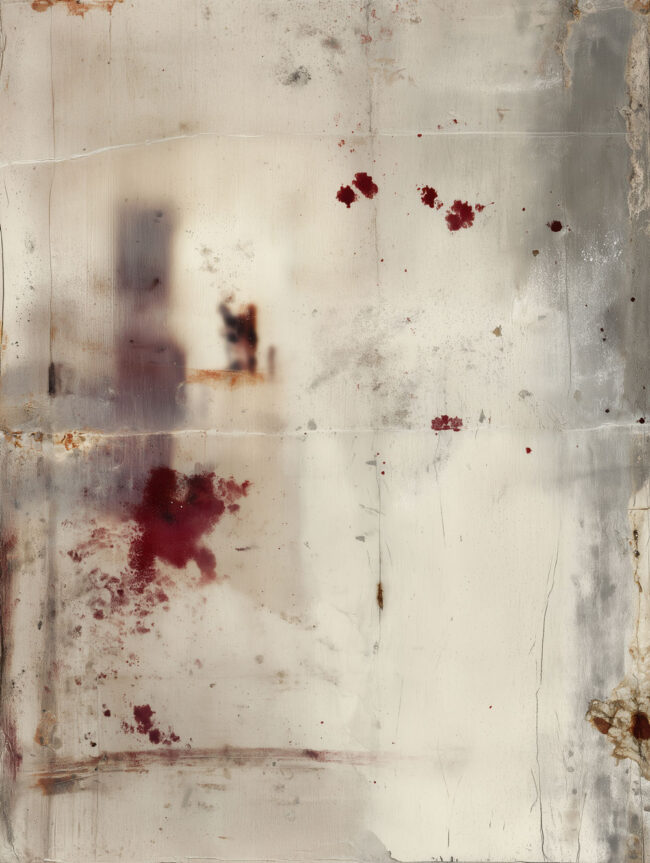
Looking into the Face of the Gorgon by Dana Amir and Azz a-Din

The floors are red, not as a metaphor, not as a political statement; they are red. And this is what I ask myself: Is our blood even red? Are we made of the same substance, the same suffering, the same divine breath that once stirred a man’s lungs? If so, why do we die like vermin, why does the world avert its eyes while we rot in plain sight? Why does the hunger of a single hostage shake the souls of nations, while the emaciated bodies of a million children elicit only polite disbelief?

Will the Sun Rise Again in Gaza by Hala Al Sarraj

It’s when you leave your inner self and move into the unknown; it’s when you are forced to flee from your awareness, from your assets, from yourself, to move as a physical creature and start to find any place or shelter. Literally, you are not aware enough to ask yourself, “What is this? Is this real, or am I watching a terrifying movie? Am I awake?”

For how long!? From Gaza by Mohamed Omran Abu Shawish

I have not had the luxury to mourn fully, to scream, to collapse under the weight of it all. Every time I feel the pull to surrender, to collapse under the immense weight of my grief and exhaustion, I remind myself of all those who have anchored their strength within me. They planted the stakes of their resilience within my ribs.

Activating Hope in Dark Times by Sahar Vardi

This is an argument based on faith that there is right and wrong—and that at some point things will be different. Faith that no occupation lasts forever, oppressed people eventually reach independence, and justice will prevail. Faith is hard to hold. Over years of activism, I have found that focusing on what we are able to achieve in our work has helped me hold on to hope.

Breaking Narratives by Diana E. Moga

I am writing to share my personal narrative and reaction to recent events at APsaA and in the Middle East. I am Jewish, and I lived in Israel from the time I was five, when we immigrated to Israel from Romania in the midst of the Lebanon War, to the time I was fourteen, when we left as the sirens wailed during the Gulf War. I watched Holocaust documentaries every year on Remembrance Day from the time I was eight years old.

Reader Response: Arnold Richards

This communication is a response to the two articles published in ROOM 6.23 about the relationship between Israelis and Palestinians in Israel and on the West Bank: Naftally Israeli’s essay “From Erasure to Exclusion” and Richard Grose’s book review of Lara and Stephen Sheehi’s book, Psychoanalysis Under Occupation: Practicing Resistance in Palestine….