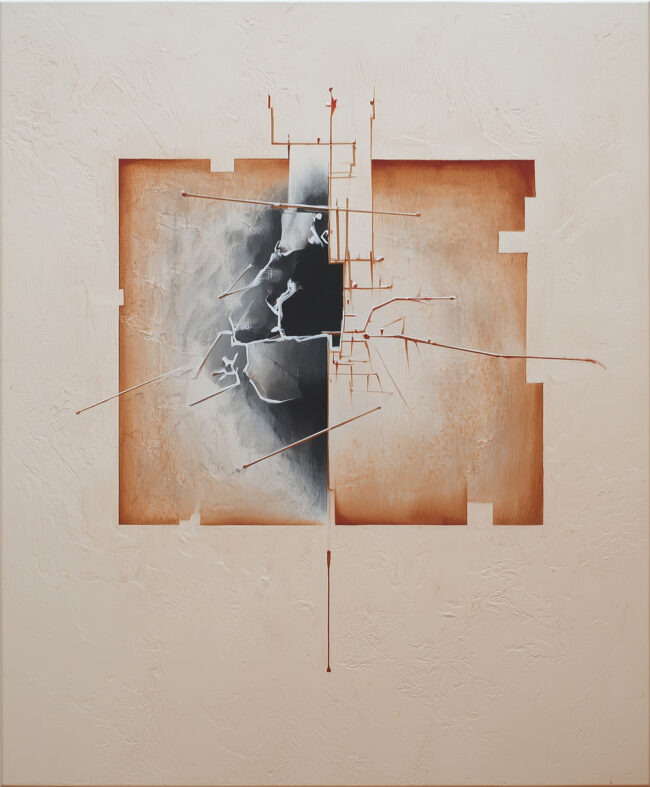
Splitting Genocide by Celeste Kelly

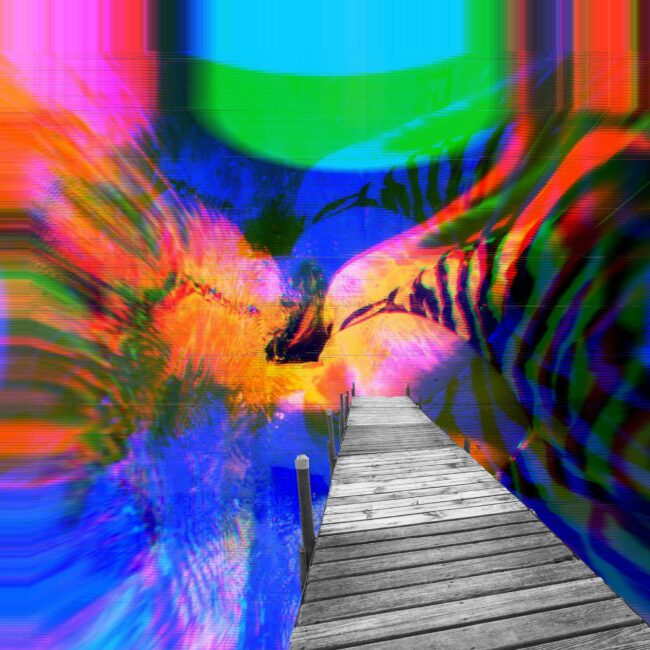
We can’t split something off when we’re surrounded by it. The same forces flattening Gaza are showing up here under different names—economic inequality, xenophobia, the rollback of human rights. I’m trying to bridge the divide between denial and collapse, to find ways of staying engaged without turning away.

Looking into the Face of the Gorgon by Dana Amir and Azz a-Din

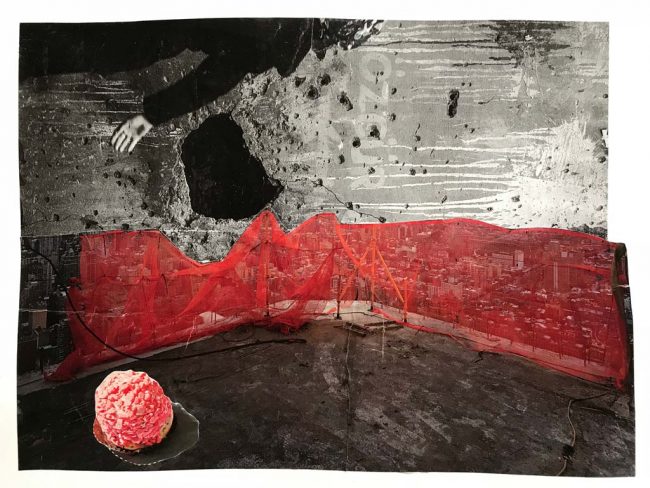
The floors are red, not as a metaphor, not as a political statement; they are red. And this is what I ask myself: Is our blood even red? Are we made of the same substance, the same suffering, the same divine breath that once stirred a man’s lungs? If so, why do we die like vermin, why does the world avert its eyes while we rot in plain sight? Why does the hunger of a single hostage shake the souls of nations, while the emaciated bodies of a million children elicit only polite disbelief?

Our Children: Discarded, Disdained, and Destroyed by Jyoti M. Rao

Such desires must be obfuscated. Indeed, in the face of blatant refusal to protect children, which amounts to relentless aggression against them, we find psychoanalytically curious invocations of protection amidst active harm, a phenomenon observable in abusive families and troubled intrapsychic environs alike. ‘Protective custody’ results in incarcerated children—another pause-worthy phrase that describes a violation of children’s rights per the Convention—languishing alone in solitary confinement for their ostensible protection in adult prisons.

Why We Can’t Stop Our Children from Dying of Gun Violence by Irwin Kula

Individual positions may be factually accurate or morally defensible. But the rightness of any particular position matters less than understanding how all positions function within an unconscious system that ‘works’ for everyone—allowing us to maintain our identities, our professional roles, our political affiliations, our ways of life, while experiencing ourselves as caring, engaged people who are doing something about this terrible problem. Our ritualized response to school shootings, going back to the Columbine shooting more than twenty-five years ago, protects us from confronting the transformations required to address this tragedy.

The Accidental Activist by Nancy Prendergast

The Accidental Activist by Nancy Prendergast

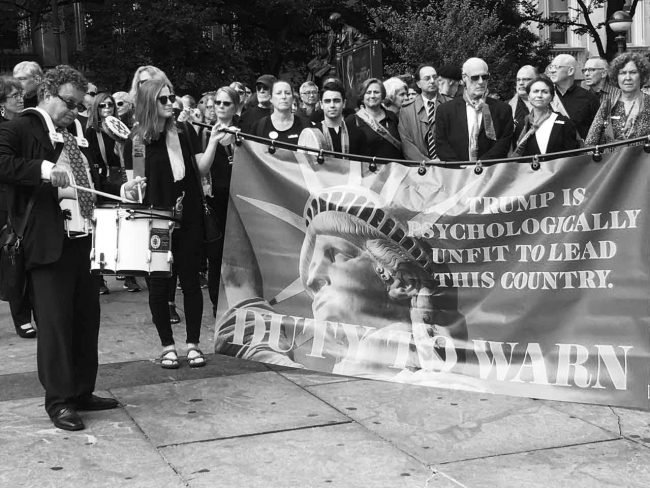
I grew up in the blue state of Rhode Island, where my father was active in local Democratic politics. I voted mostly for Democrats but registered as an Independent. While I never missed voting in a presidential election, I didn’t keep up with local or state politics. I simply had no time. I hoped our Sherwood Forest friends would come to their senses when they saw how woefully unprepared Trump was to govern. … But no matter what outrageous action Trump and the Republicans took, our friends reacted positively. When they realized we didn’t share their enthusiasm, they stopped talking politics with us. In the fall of 2018, I snapped.

In My Backyard by Mark Solms

Since going through the process on my farm using those psychoanalytical tools, I have seen all around me in this country opportunities for what we learned to be applied to psychoanalysis. There’s a special role for psychoanalysis in South Africa, and it’s a little different from other places. […]

© Rachel Brown

DISORDERED: Conversations about mental health and society by Rachel Brown

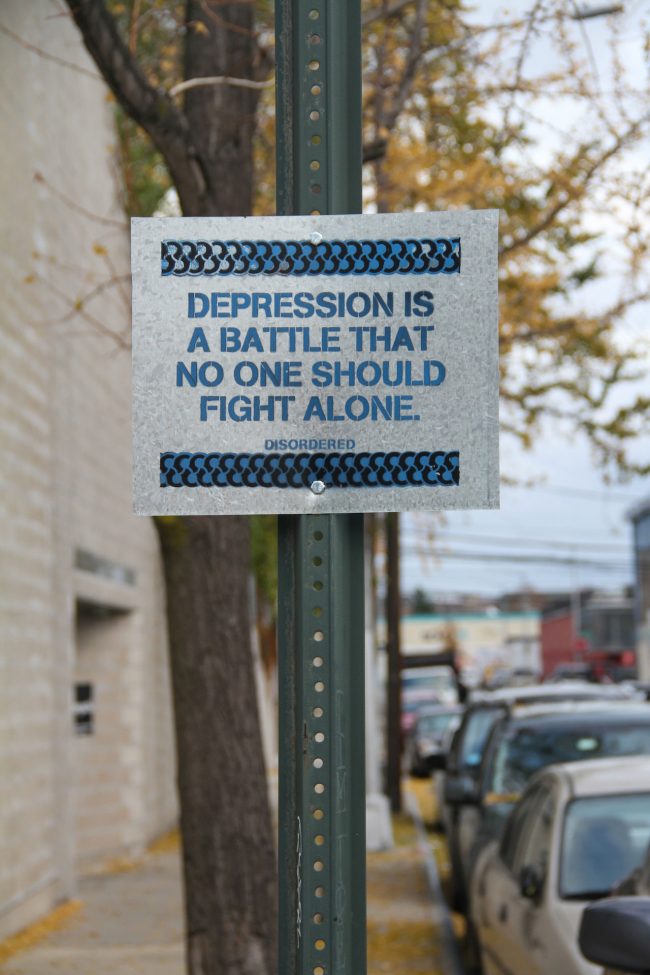
Disordered was a collaborative, participatory street art project designed to destigmatize mental health challenges like depression and anxiety, and reframe health as a societal issue. The project took the form of conversations, stickers, signs, and a mural in public spaces around New York City. Through a combination of social practice and guerrilla strategies, Disordered intervened in public places, creating a space for personal interactions about the connections between mental health challenges and societal issues. It pushed ideas about how our history, culture, political, and economic systems affect our health in order to inspire personal, social, and political transformations.

Photography by Alexa Mazzarello

WHAT IS AT PLAY by Margaret Fulton

When I was asked to write a piece for this newsletter on the subject of play, work/life balance or the analyst at play, I began gathering materials as I usually do in my writing process, and then I wait and see what thoughts begin to germinate…