What Is Underneath by Danielle Speakman

Danielle Speakman, PhD, is a clinical psychologist in private practice in Cambridge, MA. She is a graduate of Boston Psychoanalytic Society and Institute. Her enduring interest is in Jungian depth psychology, and she seeks to hold a therapeutic space where existential and spiritual questions are welcome. She views writing as a form of activism, love, empathy, and attention—essential to all that she does. She believes each of us has a part to play in the particular cosmos of our time. In these moments of helplessness, uncertainty, and war, poetry has become her way of reaching toward others, almost like passing someone a love note. She has been especially deepened by her doctoral work interviewing street children in Lima, Peru, which has continued to connect her to Latin America. She also practices and teaches yoga, which she believes keeps her honest, rooted in her body, and resistant to the pull of abstractions.

A Bag of Broken Tiles: Report from Tehran by Darya Navidi

If I was refusing the war, my patients were doing something no less striking. In the first week, nearly all of them spoke not of explosions, fear, or death but of boundaries in their relationships. Of partners who failed to understand them. Of things left unsaid, now expected to be intuitively known. The war remained almost entirely absent from the room. It appeared only in fragments—quick references, passing remarks—never staying long enough to be examined.

On This Land by Laura Farha

My patient and I, both presently in the US, are originally from neighboring villages in south Lebanon. She, Shia from a predominately Shia village; I, Orthodox Christian from a mixed village. I can see her village from the veranda of my three-hundred-year-old ancestral home. It’s a view that I know and love well.

The White Paint from Mr. Darcy’s Shop by Charmaine McCaulay

What I carried within me, the quiet measuring of worth, was part of something bigger, a system of internalized racism and lateral violence born from the dominance of whiteness. It is oppressive and heavy, a hierarchy that demands we look down even when we are being looked down upon. Mimicking the outside white world, I became judge and jury of worth, and I aimed that power at people of colour.

Lori Horowitz

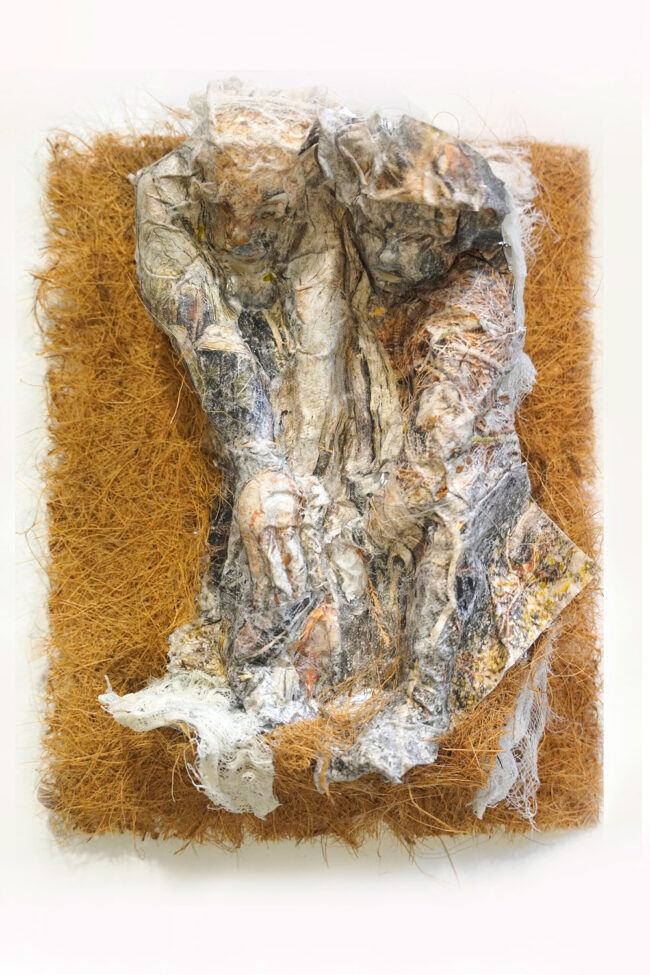
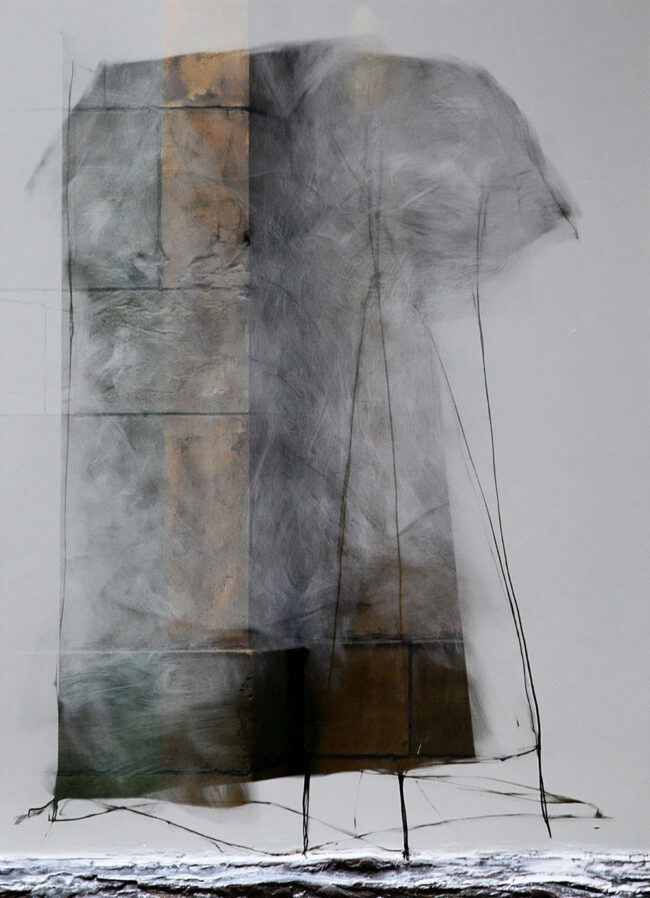
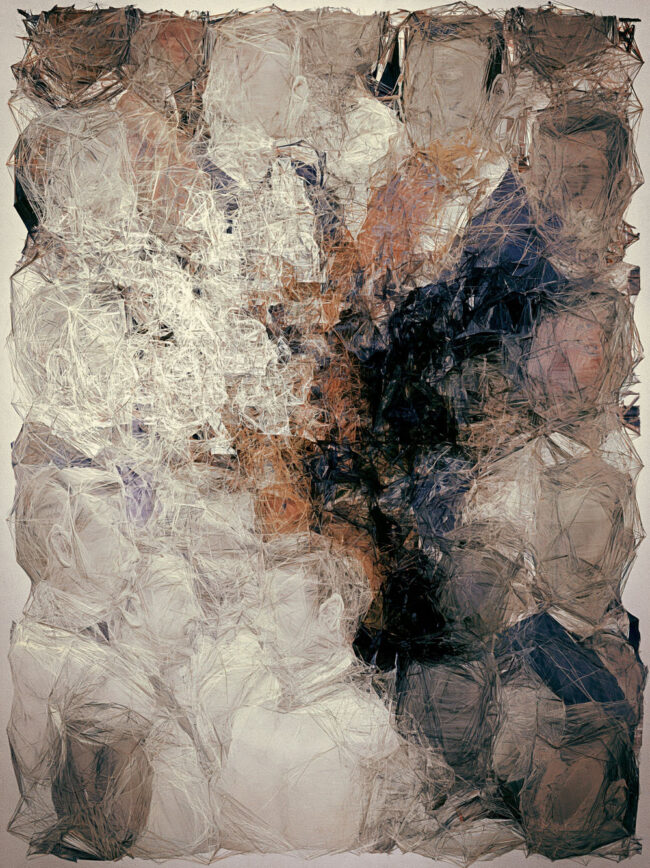
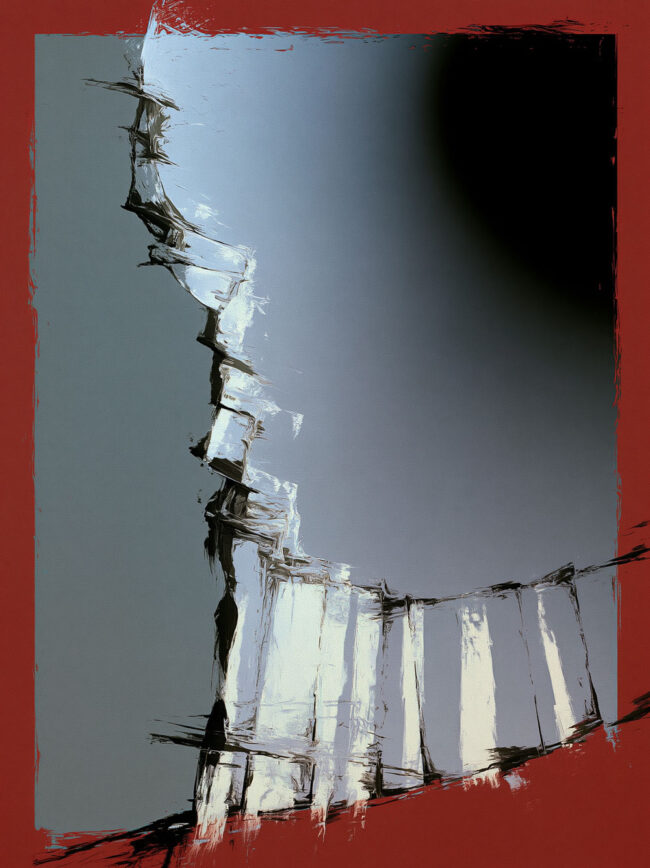
Meenal Raghava is a New York–based interdisciplinary artist whose work explores the fluid construction of identity shaped by migratory and transnational experience. Working with oils, acrylics, concrete, and epoxy, she creates layered surfaces where memory and material intersect, reflecting how belonging is continually renegotiated across shifting cultural terrains.

Good People by Jacqueline Morgan

Most people are good. I wish I’d had these words handy when a woman yelled at me the day before Christmas because I couldn’t let her return her puzzle without a receipt. I called my manager over to handle it, stepping aside and allowing my eyes to glaze over as he authorized the return. The customer thanked my manager, saccharine-sweet. I refused to look at her until she was gone.

War and the Dreamworld by Ipek S. Burnett

Death anxiety. These words were on my lips as I emerged from the dream. Was it a lay interpretation? An existential explanation offered by my returning consciousness? A consolation, like wiping the brow of a child at night, whispering, “It was just a nightmare”? An attempt to convince myself that the dream signaled a common, if repressed, fear?

THROW YOUR INHERITANCE AWAY by Mahsa Nourzadeh

Mahsa Nourzadeh (Mahsa Nouri) is an Iranian poet who writes in both Persian and English. She has not only found poetry a means to share her feelings and heal her wounds but also considers translation an adventurous and helpful path. She translates her thoughts and feelings into poetry, her poems into another language, sometimes into another art form, and finally into the feelings of the audience, using translation as a way to communicate. With each step along this path, she aims to shed new light on the depths of her own and the audience’s feelings, beginning the healing of unspoken pain. You can read her other works in Spellbinder magazine and Encyclopedia Prismatica.

Photo by Paaz PG

Living Wisdom International High School — Afghanistan Program

At the heart of EFL is a single, luminous idea: The overarching goal of the system is to help each student develop maturity—defined as “the ability to relate appropriately to realities other than one’s own.” And from that maturity flows something even more precious: true success, defined as the ability to face life’s challenges with joy, wisdom, and inner strength—creating a life that is both personally fulfilling and beneficial to others.

Photo by Mahmoud Hamdi

The Journey from the First Afghan Student to the First Afghan Teacher at Living Wisdom

It was January 2023. Life in Afghanistan had become unbearably difficult for girls. For us, education was not just about books or classrooms. It was our only path to freedom, to dreams, to proving to our community that we too could build our country alongside our brothers. For me, school was more than a building; it was a sanctuary of hope. I dreamed of becoming a doctor, of healing the sick and giving families a reason to believe in tomorrow.

Photo by Daniel Obscura

We Are the Light: No. 5

We are the Light is a forum and gathering place offering free and open expression to women from around the world whose voices are seldom heard and whose futures are threatened. The education and health of women, attention paid to the development of girls and women, and inclusion of the outlooks of women are critical to the welfare of the world.