
In Memoriam: Sara Mansfield Taber — Anthropologist, Social Worker, Teacher, Writer — July 26, 1954 - February 11, 2026
by Hattie Myers
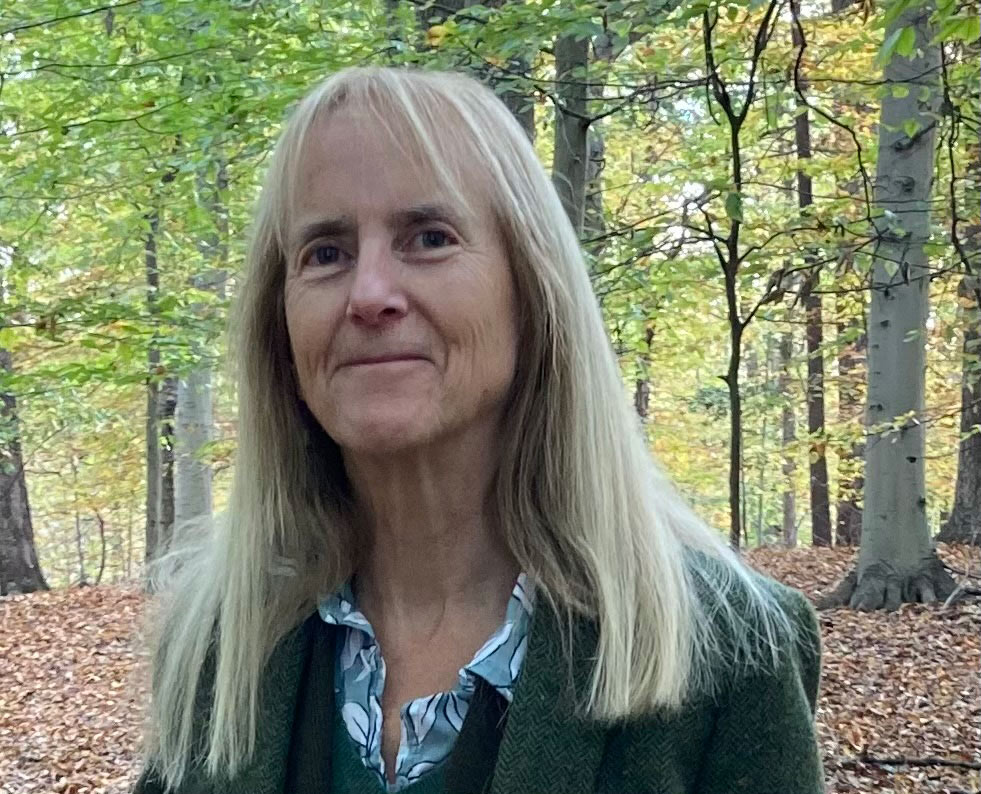
Sara was born on July 26,1954 in Yokosuka, Japan. As a diplomat’s daughter, she learned from an early age how to make others feel welcome by asking them about their lives and experiences. Growing up as a “global nomad” led to her multifaceted life of learning, writing, teaching, activism, and social work. Decades later, she came to understand the hidden aspects of her father and her own fractured childhood through writing her first memoir, entitled Born under an Assumed Name: The Memoir of a Cold War Spy’s Daughter.
While still in social work school, Sara had the opportunity to go to Patagonia with her future husband Peter to study whales. Bringing her interest in human development to the marine world, she and Peter spent 18 months studying the separation and individuation process of Southern right whale mothers and their calves. Sara’s first published paper, co-authored with Peter, appeared in the Journal of Animal Behavior and remains, 50 years later, a seminal paper in the field.
Following her return to the US, Sara worked as a social worker at Stanford University’s Child Guidance Clinic before returning to Patagonia on a Kennedy Fellowship as part of her doctoral work at Harvard. Writing was becoming the through line that would accompany her for the rest of her life. Dusk on the Campo: A Journey in Patagonia (1992), the first of her seven published books, was an intimate look at the lives of sheepherders who had emigrated to remote Patagonia from Spain’s Basque country. Bread of Three Rivers: The Story of a French Loaf (2002) gave Sara entré into the lives of salt farmers, hydro engineers, wheat growers, and the Medaille d’Or Boulanger baker who produced the best bread in France. In Sara’s words, writing “wed art to observation.”
For Sara, learning, writing, and teaching were intertwined. She taught at the University of Minnesota, Johns Hopkins University, the Vermont College of Fine Arts, the Writers Center in Bethesda, Maryland, and the New Directions writing program at the Washington Baltimore Center for Psychoanalysis, and was a William Sloane Fellow in Nonfiction at the Bread Loaf Writers’ Conference. She facilitated writing groups in her home and all over the world, shepherding many of her students’ books into print. Her handbook Writing for Resilience: How to Write to Cope with Life’s Stresses, Traumas, and Difficult Times was initially inspired by her work in 2019 with KIND (Kids in Need of Defense) where she facilitated writing workshops for legal staff coping with secondary trauma from their work with unaccompanied minor children, some of whom had been separated from their parents at the border. She further developed the protocol and trained facilitators for The Things They Carried Project (TTCP) helping frontline health care workers during the COVID years. This became the model for the Asian University for Women (AUW) in Bangladesh’s Writing for Friendship program as well as for a parallel program that partners with underground schools in Afghanistan. Both programs continue to be vibrant lifelines for hundreds of young women born into oppressive life circumstances.
Along with her many books, Sara’s essays have been published in the Southwest Review, American Scholar, The Washington Post, and ROOM: A Sketchbook for Analytic Action among other magazines. What is less known is that it was Sara who brought Shegofa Shabaz’s essay, “Letter to the United Nations,” to our attention and, through her leadership, helped ROOM establish and curate We Are The Light, a permanent section on our website in which women, whose voices have been silenced, are seen and heard the world over.
Sara’s final year was divided between the loving constancy of her family and friends, mentoring the young Afghan women whose well-being meant everything to her, her writing students, and a 180-page epic poem entitled The Women of the Oresteia which she completed two weeks before her death. Her last published book, illustrated by her daughter Maud Taber Thomas, was Chance Particulars: a Writer’s Field Notebook for Travelers Bloggers, Essayists, Memorists, Journalists, Adventurers, Naturalists, Sketchers, and Other Note-Takers and Recorders of Life. She tells us that this book draws together all that she knows: how to stride into the world with the keenness of a foreigner, observe it closely, and share it with all the richness and color one can muster. Our hearts are with her husband Peter and her children Maud and Forrest. We will miss her deeply and are grateful that ROOM was, for too short a time, one of her many worlds.
- Hattie Myers, PhD, Editor in Chief: is a member of IPA, ApsA, IARPP, and a Training and Supervising Analyst at IPTAR.
- Email: hattie@analytic-room.com
ROOM is entirely dependent upon reader support. Please consider helping ROOM today with a tax-deductible donation. Any amount is deeply appreciated. |