
The Adelphi Asylum Project: Thinking Psychoanalytically About Exile and Migration
by Michael O’Loughlin
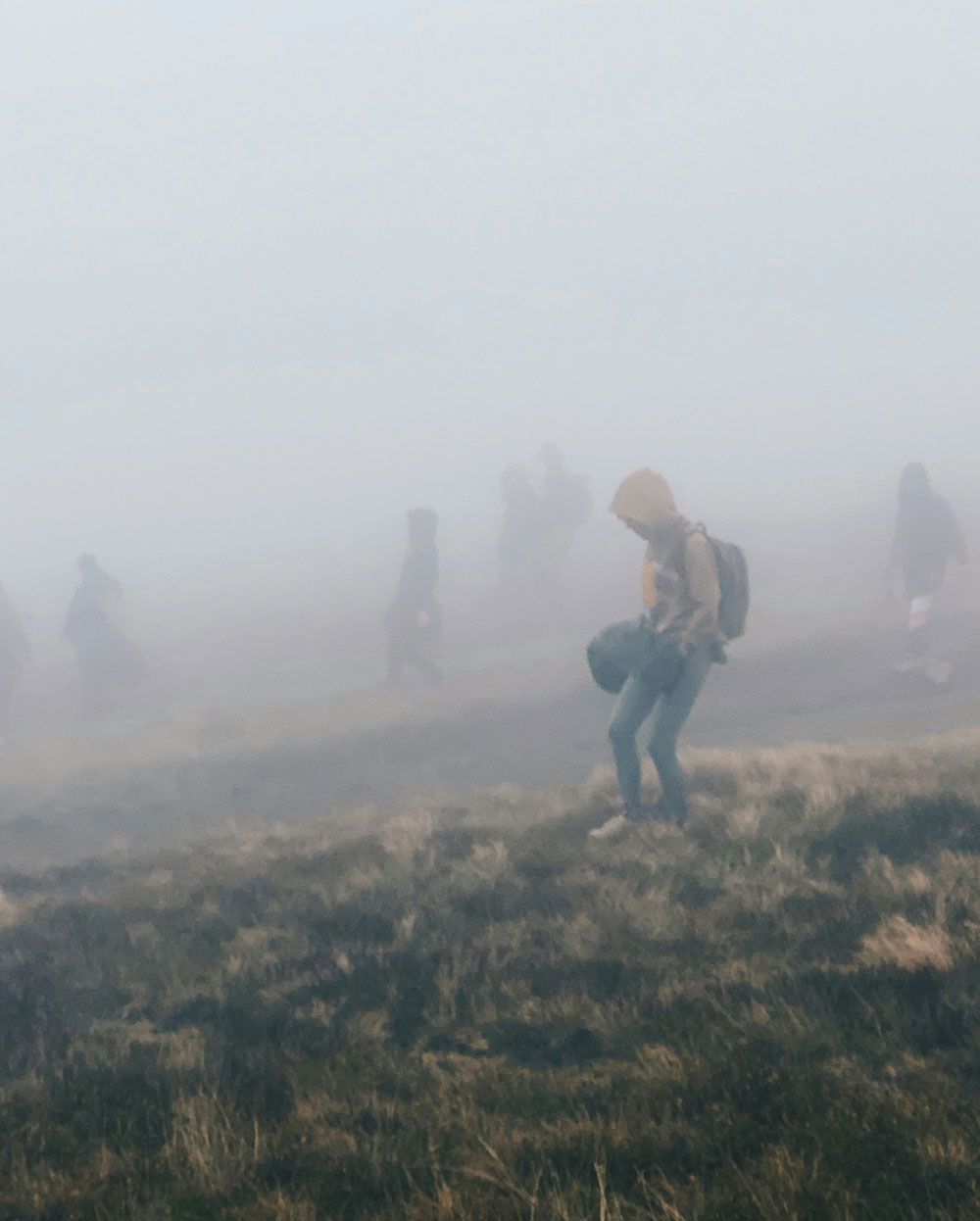
The scale of global migration is hard to fathom. From 2015 to 2025, UNHCR estimates that the number of internally and externally displaced persons worldwide increased from around 70 million to close to 125 million people. During the same period, more than 34,000 people drowned in the Mediterranean while seeking to navigate to Europe in vessels that were not seaworthy. While the response in Europe in 2015 was one of relative compassion in many countries, the tide has since turned, and the discourse of migration now is predominantly one of criminalization. Populist and nativist discourses have surged across the white world as fears of a dark invading other are stoked.
Borders are being fortified, deportations are on the increase, and gateway countries are being paid by Western powers to incarcerate migrants and foreclose their migration journeys. As a psychoanalyst, I seek to contribute to the humanization of exiles and to a reclamation of the place of the exile in our world; in part by writing and teaching about the resiliencies, suffering, and unfathomable creativity that exiles bring with them, and in part by seeking to act locally so that I might impact the lives of exiles. I also work to introduce doctoral students and mental health workers to the possibility of social activism as part of their emerging professional identities.
I am a voluntary exile, having journeyed form Ireland to pursue doctoral studies in New York City. While this is a migration of unalloyed privilege, as Julia Kristeva (1991) notes in Strangers to Ourselves, and as the writers in André Aciman’s (2000) Letters of Transit document, exiles necessarily live with the complexity of hybrid identities, with one foot in the country of origin and one tentative foot in the land of arrival.
The Adelphi Asylum Project
I’ve now diagnosed three asylum seekers with PTSD according to DSM criteria. It’s the only diagnosis available to me which is considered valid in this country—yet PTSD is a poor representation of what these people have and continue to suffer. It wasn’t designed for them; but if they don’t have PTSD, they don’t count. My skin crawls squishing these dynamic, resilient, horrifying, inspiring, and inconceivable stories into the tidy box of PTSD. I have begun each by writing their full story and then painfully deleting their resilience, their courage, their perseverance, and the contextual details which make them human until all that is left is evidence of PTSD. — Lori Pasqualino
These comments, written by Lori Pasqualino, a student in my “Migration and Displacement Trauma” doctoral course and who participates in the Adelphi Asylum Project, capture the ambivalence explicated by Fassin and Rechtman (2019), Nguyen (2012), and myself (O’Loughlin, 2024) about seeking to shoehorn asylum applicants into a reductionist and Westernized psychological discourse in order to “help” them succeed with their asylum claims.
The majority of the clinicians who perform forensic evaluations for asylum seekers receive little more than a procedural overview of the mechanics of extracting nuggets of “evidence” to make a case that will pass muster in immigration proceedings. Seeking to address this lacuna, I developed my doctoral course at Adelphi University to deepen and complexify how we understand the experience of exile, while simultaneously recognizing the hegemony of a discourse that, as Lori notes, is fashioned to reduce migrant subjectivity to a dehumanizing, albeit instrumentally potent, diagnostic code.
For clinicians interested in making a social contribution, and for those interested in understanding how psychoanalysis can engage with social justice issues, migrant subjectivity, with its implication of migration trauma, intergenerational trauma, critical refugee studies, genealogical and cultural legacies—as well as considerations of sovereign power, necropolitics, and the potential for decoloniality and the possibility of a liberatory psychoanalysis—is extraordinarily fertile ground for inquiry. If we are to resist the fetishization and objectification of human abjection and if we are to grapple with the sociopolitical production of human suffering, then psychoanalysis needs to be willing to expand the discussion of clinical work as, for example, Karima Lazali (2021) does in Colonial Trauma, to recognize that a capacity for free association, creativity, and even to name one’s origins—to give an account of oneself, as Judith Butler (2009) would have it—is profoundly shaped by culture, ideology, circumstance, and most particularly the ways in which sovereign authorities artfully construct particular persons as abject, lesser, and non-deserving. Francisco Gonzàlez (2019) reminds us of the generative possibilities that emerge when we have the opportunity to invite the ancestry, genealogy, interiority and beauty of our migrant subjects into our presence. To do this we have to be willing to abandon the kind of traumatogenic and normalizing gaze that discourses such as the DSM—and perhaps even clinical psychoanalysis itself—offer. Discussing asylum work, Spyros Orfanos (2019) argues that we need to become “ethically attuned because of our inescapable implication in the suffering of others” (p. 272). He goes on to argue that “doing ‘good clinical work’ is in part ‘doing good’ in the sense of making at least one corner of the world a better place” (p. 273).
In what follows I will give a brief overview of the components of my “Migration and Displacement Trauma” course to illustrate how a variety of lenses can be used to usurp the supposed neutrality of the psychoanalytic gaze and the received construction of migrants as abject, other and even criminal. We begin by viewing 4.1 Miles, a documentary by Daphne Matziaraikis that depicts harrowing conditions for migrants crossing the Mediterranean in defective vessels in 2018, a time when European governments devoted more resources to rescue services than they do today. A calculated push-back of sinking vessels and an intentional delayed response to distress calls is the new norm. This viewing is augmented by discussion of writings by Dider Fassin and Virginia DeMicco which place ethical and humanitarian questions squarely at the forefront. The arbitrary nature of sovereign borders and the state-sanctioned brutality of border enforcement are encountered close-up in the stark autobiographical writings of Behrouz Boochani and Shahram Khosravi.
My pedagogical approach builds on Shoshana Felman’s psychoanalytic pedagogy (Felman, 1992; O’Loughlin & McLeod, 2015). I deploy poetry, film, and personal narrative to reduce resistance and open the unconscious to receive experience, and I place an emphasis on autobiographical sharing as a means to encourage internal work and overcome intellectualization and distancing. We begin this five-week section of the course, therefore, with reflection on our origins to find points of internal correspondence that will allow greater receptivity to the stories we read and view. We then engage with compelling personal narratives of the remarkable journeys people embark on; for example, watching footage of the trek through the treacherous Darien Gap into Mexico, absorbing Ai We Wei’s documentary Human Flow, grappling with Hassan Fazili’s chronicle of his family’s harrowing journey from Afghanistan to Germany in Midnight Traveler, and engaging with Sholeh Wolpe’s and Dagmawi Yimer’s meditations on loss. Discussion of these narratives inevitably raises psychopolitical questions as to the ways in which structures of inequality embedded in neoliberalism, racialized capitalism, and the legacies of colonial extractive capitalism have helped produce what is presented to us as an ominous “migrant crisis.” This narrative shift is important so that we do not get lulled into essentializing abjection and victimhood as we view masses of apparently powerless men, women, and children shuttled from place to place in the direst of circumstances. Students grapple with the social constructedness of refugeeness and migrancy and begin to engage with the larger necropolitical forces that cause masses of Global South residents to embark on such journeys of desperation. As a further corrective to the hazards of essentialization, we devote the final class in this section to the topic of exile, including the complexity of the identity journey for even those privileged to choose voluntary exile. I include myself among these (cf., O’Loughlin, 2009), and we read Aciman and Gonzàlez to shed some light on the complexity of the exile’s journey. Julia Kristeva (1991) suggests that those of us who embark on such journeys are “strangers to ourselves.”
Addressing the experiences of migrant mothers who lost their children in the Mediterranean, DeMicco offers a stunning description of the power of psychoanalysis to meet and exhibit humanity in the face of even the most appalling losses. Her words, and the work of other intrepid therapists such as Angela Joyce, offer a prima facie case for why psychoanalysts should respond to the call. Here is how I summarized De Micco’s work in my 2024 paper:
Complementing Agamben’s (1998) discussion of bare life, De Micco speaks of the incompleteness of persons who experience such abjection in that “what survives is on the one hand that which does not die but also, on the other, that which does not live” (p. 118). What happens when the space for thought and feeling must be erased, when those who have sunk to the bottom of the ocean can be neither mourned nor buried? De Micco speaks movingly of working with mothers who wait perpetually for the sea to return their lost children. How, she asks, can we assist such sufferers in imagining the unimaginable, in representing the unrepresentable, in completing mourning? De Micco speaks of “staying with the inhumane until space opened again, for a word, for the possibility of a testimony, which is often announced by the capacity to start dreaming again” (p. 120). Addressing these embodied, somatized, and frozen elements, she suggests that we might draw on psychoanalytic and intergenerational trauma theory (cf. O’Loughlin, 2007a, b; in press). This calls for a work of mourning or what Fédida speaks of as incubation, a moment “[w]hen the inhumane begins to be transformed into the human” (quoted in De Micco, 2018, p. 120). De Micco concludes: “And this is how what was the unimaginable par excellence is transformed into one’s most intimate and secret possession, something rich and strange, eternally alienating, that inhumanity which we have survived and which survives in us” (p. 123). It is in addressing these frozen places, places suspended in time, residues that resist symbolization, that psychoanalysis has its greatest utility, as the work of, for example Davoine and Gaudillière (2004) and Ferenczi (1988) illustrates. (O’Loughlin, 2024, np.)
A psychoanalysis that can take account of context, culture, the role of ideology in subject formation, and the role of sovereign systems in manufacturing social suffering, and that can deploy a depth understanding of intergenerational and sociohistorical trauma, has much to offer a world where structured inequality is increasing and the possibilities for human solidarity appear to be in decline. Addressing the suffering of forcibly displaced persons is a case in point.
References
- Aciman, A. (2000). Letters of Transit: Reflections on Exile, Identity, Language, and Loss. The New Press.
- Butler, J. (2009). Giving an Account of Oneself. Fordham University Press.
- De Micco, V. (2018). “Migration: Surviving the Inhumane.” Italian Psychoanalytic Annual 12: 117–125.
- Felman, S. (1992). “Education and Crisis: On the Vicissitudes of Teaching.” In C. Caruth (Ed.), Trauma: Explorations in Memory. Johns Hopkins University Press.
- Kristeva, J. (1991). Strangers to Ourselves. L. Roudiez (Trans.). Columbia University Press.
- Lazali, K. (2021). Colonial Trauma: A Study of the Psychic and Political consequences of Colonial Oppression in Algeria. Polity Press.
- Fassin, D., and R. Rechtman (2009). The Empire of Trauma: An Inquiry into the Condition of Victimhood. Princeton University Press.
- González, F. (2019). “Only What Is Human Can Truly Be Foreign: The Trope of Immigration as a Creative Force in Psychoanalysis.” In J. Beltsiou, Immigration in Psychoanalysis: Locating Ourselves. Routledge.
- Nguyen, L. (2012). “Psychoanalytic Activism: Finding the Human, Staying Human.” Psychoanalytic Psychology 29 3): 308–317.
- O’Loughlin, M. (2009). “Strangers to Ourselves: On the Displacements, Loss, and ‘Homelessness’ of Migrant Experiences.” In The Subject of Childhood. New York: Peter Lang Publishing.
- O’Loughlin, M. (2024). “Meeting Migrants: Mourning, Possibility and Generativity.” International Journal of Applied Psychoanalytic Studies, Special Issue on Social Justice and Psychoanalysis 41 (4), https://doi.org/10.1002/aps.1870.
- O’Loughlin, M., and Barbara Ann McLeod (2015). “Thinking Beyond our Means: Engendering a Depth Understanding of Trauma.” In O’Loughlin, M. & Charles, M. (Eds.), Fragments of Trauma and the Social Production of Suffering: Trauma, History, and Memory. Lanham, MD: Rowman & Littlefield.
- Orfanos, S. (2019). “Drops of Light in the Darkness: Migration, Immigration and Human Rights.” Psychoanalytic Dialogues 29 (3): 269–283.
- Michael O’Loughlin is Professor in the College of Education and Health Sciences and in Derner School of Psychology at Adelphi University, New York. His most recent book (edited with L. Rothschild and S. Akhtar), Between Amnesia and Recollection: Environmental, Creative and Clinical Pathways to Memory, is coming soon from Karnac. He writes on intergenerational trauma, psychosis, childhood subjectivity, refugee and social justice issues, fascism, and populism. Since 2018, he has been co-editor of the journal Psychoanalysis, Culture & Society. He is editor of the book series Psychoanalytic Interventions: Clinical, Social, and Cultural Contexts for Bloomsbury, a Founding Scholar of the British Psychoanalytic Council, and founder and director of the Adelphi Asylum Project. He has a private practice for psychotherapy and psychoanalysis on Long Island, NY.
ROOM is entirely dependent upon reader support. Please consider helping ROOM today with a tax-deductible donation. Any amount is deeply appreciated. |