

Voices Unveiled: How an Online Course is Transforming Afghan Women’s Lives
by Cara Cruickshank
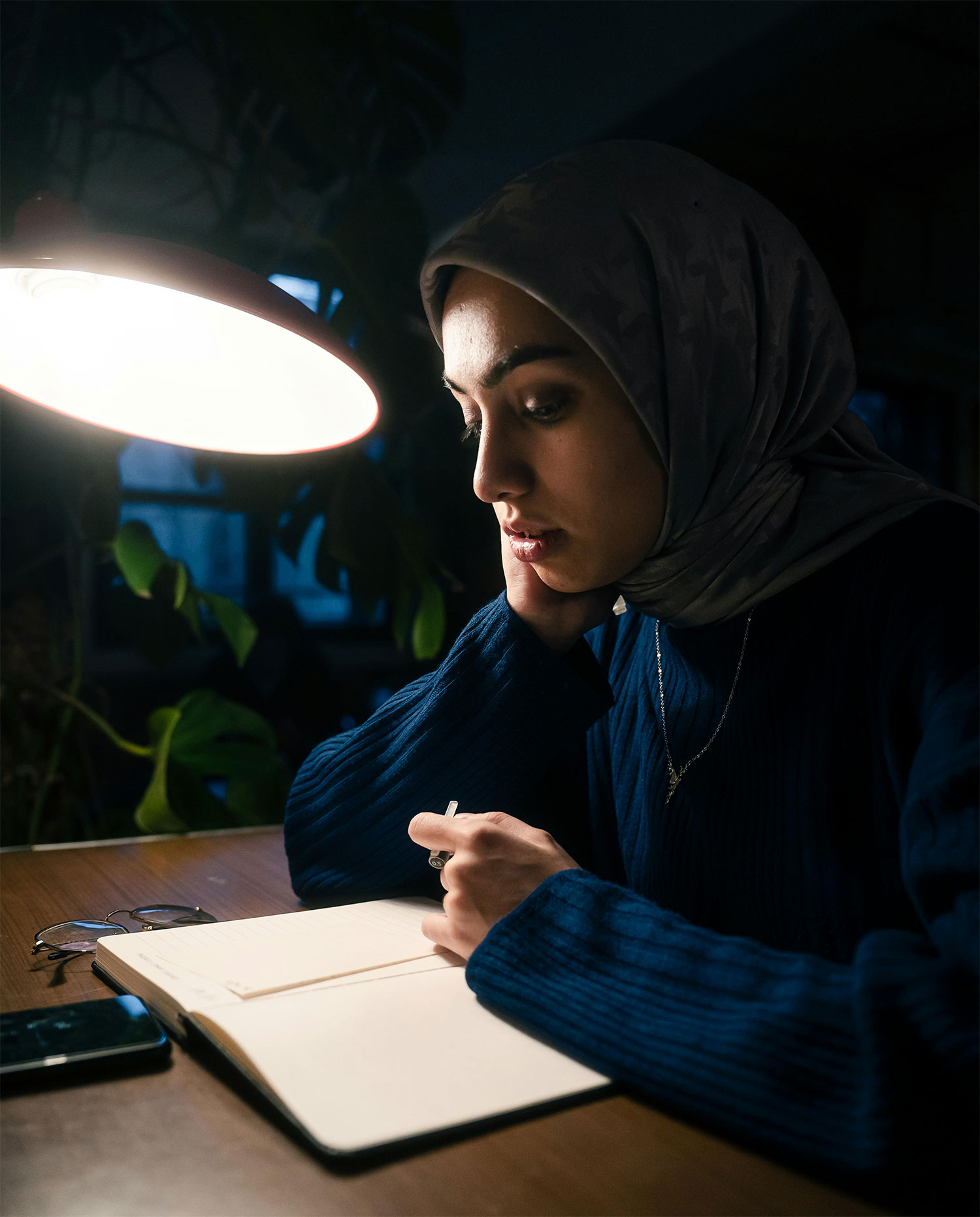
In the shadows of oppression, a radical light of hope shines through screens across Afghanistan. The Voices Unveiled Self-Empowerment program is giving Afghan women what the Taliban has tried to take away: education, community, and the power to dream.
1.4 million—that’s the verified number of Afghan girls who have been deliberately denied access to secondary education since the Taliban takeover in 2021, according to the latest UNESCO data. That means 1.4 million futures dimmed, dreams deferred, and voices silenced. Some of these are women who refused to become statistics—women who, with direct support, found ways to continue their education despite overwhelming odds. This isn’t just about education; it’s about whether we allow an entire generation of women to disappear from classrooms, professions, and public life.
“I Didn’t Know I Was Allowed to Dream”
In August 2021, when the Taliban seized control of Afghanistan, the world watched as decades of progress for women’s rights unraveled overnight. Schools closed their doors to girls. Universities emptied of female students. Professional women were ordered home.
But in the digital realm, a revolution was quietly taking shape.
The Voices Unveiled Self-Empowerment program, a comprehensive 12-week online course, has become a lifeline for Afghan women and girls living under Taliban rule. Meeting three times weekly in a secure virtual space, participants explore everything from mental wellness and critical thinking to trauma healing and feminist principles—creating what one student calls “a mirror that showed me who I really am, not what society told me I was.”
U.S. Aid Cuts: The Digital Lifeline Under Threat
The Taliban’s rule in Afghanistan has created an “unparalleled” system of gender-based discrimination according to UN human rights experts Richard Bennett and Dorothy Estrada-Tanck following their eight-day visit to the country. Since the Taliban’s takeover, devastating consequences have followed: child marriages have increased by 25% since the Taliban takeover, with 66% of the victims of forced and early marriages being schoolgirls, and 51% of these forced and underage marriages carried out by local Taliban members. A staggering 94.3% of women who were child brides report being unemployed with limited future opportunities.
The mental health crisis is catastrophic, with women accounting for approximately 80% of the 3,000 recorded suicide attempts in recent years. Self-immolation is particularly common among females aged 14–19. Unlike global patterns where men die by suicide at nearly twice the rate of women, Afghanistan has seen this pattern dramatically reversed, with women and girls accounting for the majority of both suicide attempts and deaths in 9 out of 11 provinces where data was available. Nearly half of Afghanistan’s 40 million people suffer from psychological distress, with UN Women describing the situation as “a mental health crisis precipitated by a women’s rights crisis.”
Educated women, including those with bachelor’s and master’s degrees, are being forced into marriages and domestic servitude, representing what Voices Unveiled founder Cara Cruickshank calls “the intellectual annihilation of an entire generation of female scholars.” Former professors, doctors, and engineers have become domestic servants to their husbands’ families, forced to abandon their academic and career aspirations completely.
This crisis has worsened in 2025 with the Trump administration’s escalation from a “temporary” 90-day suspension to outright cancellation of approximately $562 million in aid for Afghanistan—including $280 million from the World Food Programme and $257 million from other NGOs. The cuts have forced the closure of hundreds of secret girls’ schools previously funded by USAID, suspended all classes at the American University of Afghanistan for 700 female students, and shuttered community-based education programs serving nearly 300,000 children in remote areas.
International scholarship programs that offered escape routes for high-achieving Afghan women have been severely impacted. The Asian University for Women in Bangladesh has halted plans to bring 330 more Afghan students and is struggling to support those already enrolled through emergency fundraising. Texas A&M University’s Women’s Scholarship Endowment program, funded through a $50 million USAID grant, faces an uncertain future beyond June 2025.
The psychological impact has been profound, with one 19-year-old student expressing a sense of double abandonment: “It’s history, happening again. After the Taliban closed our schools, now President Trump did the same thing.” Digital education alternatives are becoming increasingly inaccessible as economic pressures force families to prioritize basic necessities over internet access in a country where over 22 million people require humanitarian assistance.
How Voices Unveiled Emerged
What makes Voices Unveiled unique is that it wasn’t created for Afghan women—it was created with them.
The program began with a simple act: asking Afghan women directly what they needed most. When founder Cara Cruickshank, an advocate, educator, and artistic producer whose work spans the U.S., France, and Brazil, reached out in the aftermath of the Taliban takeover, it was Aqela Nussrat, an Afghan refugee and Bard College graduate who now serves as Project Manager at Friends of the American University of Afghanistan, who first shared her story of fleeing the crisis in 2022. When Cruickshank asked what support would be most valuable for women in Afghanistan, Nussrat’s answer was direct: “teach something online.” Nussrat explained that girls in Afghanistan had gone from active lives to total isolation under Taliban rule. “They need to know that someone knows they exist.”
Building on this foundation, Afghan rap artist, fellow human rights activist, and friend Sonita Alizada specifically requested that Cruickshank focus on “Self-Empowerment and Feminism.” A global advocate for women’s rights, Alizada was recently named the 2025 Cannes Lionheart Award recipient, is a Rhodes Scholar at Oxford University, and has been honored with the U.S. Secretary of State’s International Women of Courage Award. She has also been recognized by TIME Magazine as a Next Generation Leader, by the BBC’s 100 Women, and Forbes 30 Under 30 Asia. Her highly anticipated memoir, simply titled Sonita, chronicling her journey from narrowly escaping child marriage to human rights activist, was just released by HarperCollins on July 8, 2025. Alizada understood that what Afghan women needed most were tools for inner strength and knowledge of their rights.
The insight from both women became the cornerstone of the program’s philosophy. Cruickshank, who had been moved by the remarkable resilience of the various Afghan women she had gotten to know through her previous work, understood that what these women lacked wasn’t courage or capability, but access to connection and resources. Rather than imposing solutions from outside, she mobilized her international network of educators, health professionals, and human rights advocates to create educational pathways guided by Afghan women themselves.
The name “Voices Unveiled” wasn’t chosen by Cruickshank—it came from the students, women who understood that in reclaiming their voices, they were refusing to be silenced, hidden, or erased. This name embodies both their resistance and their vision for the future.
Through partnerships with Afghan-run organizations like the Afghan Youth Leadership Academy and Generations of Change, what began as an emergency response transformed into the structured, sustainable support system that exists today—one where Afghan women lead the work themselves, with Cruickshank serving not as a savior but as a bridge-builder, creating conditions where women’s voices can flourish even under the most restrictive circumstances.
The program now relies on a dedicated network of over 30 volunteers from around the globe who contribute their expertise and time to support this mission.
While the Self-Empowerment course remains the cornerstone of Voices Unveiled’s offerings, the program has expanded to meet diverse educational needs. Students can now access elective courses in English, computer science, physics, philosophy, creative writing, art therapy and meditation—subjects that facilitate deeper connection and wellbeing, broaden horizons and open doors to future opportunities. Perhaps most valuable is the intensive personal support provided: dozens of hours of one-on-one coaching and mentoring each month ensure that participants receive individualized guidance through their educational journeys, helping them navigate both academic challenges and personal circumstances under Taliban rule.
This approach of deep listening and Afghan leadership has earned trust in communities that have witnessed too many well-intentioned but ultimately ineffective interventions. The curriculum evolves based on student feedback, ensuring it meets their actual needs rather than outsiders’ assumptions about what those needs might be.
Four Young Women’s Transformative Journeys
Mina: “Education Was No Longer My Right, But a Dream”
At just 14 years old, Mina’s passion for learning was abruptly halted when the Taliban took power. “I can still clearly remember the night before my dreams began to fade,” she recalls. “I was pulling another all-nighter for one of my final exams, not aware that it might be my last night studying.”
The months that followed were marked by a suffocating darkness as her world contracted to the walls of her home. With schools closed to girls, the silence of educational and social deprivation was deafening. After a year of this isolation, Mina discovered the Self-Empowerment course through a private online network of peers. Despite being younger than the typical participant, her determination impressed Cruickshank, who recognized in Mina’s application the fierce hunger for knowledge that transcends age.
“Voices Unveiled gave me the encouragement and confidence I had never received before,” Mina shares. “With each class, I felt a change within me—now my voice mattered, my dreams were valid.”
The impact extended far beyond the classroom. When Mina expressed her dream of becoming an astronaut, Cruickshank not only arranged a meeting with an astrophysicist but asked her friend and PhD Yuval Laor in Colorado to create a special virtual physics class for her. The confidence and encouragement Mina received through Voices Unveiled inspired her to pursue this passion further. The program fueled her determination, ultimately empowering her to seek out and secure educational opportunities that had seemed impossible before.
The inner strength and resilience Mina developed through the Self-Empowerment program gave her the perseverance to overcome tremendous odds. After three years of exclusion from formal education, Mina found her way back to school, powered by the belief in herself that Voices Unveiled had helped her cultivate.
“Everything I have now is thanks to the support Voices Unveiled has given me,” Mina says. “Every day, every second of my life, I carry the encouragement and positive energy that was given to me. Now, it is my time to pass it on to others.”
Ava: “A Lost Puzzle Piece Finding Where I Belong”
For Ava, a high school graduate with dreams of becoming a diplomat, the environment around her had eroded her self-confidence. “The constant pressure and unrealistic expectations made me start doubting myself, my abilities, my potential, and even my worth,” she explains. “I began to measure my value based on what society expected from me, which deeply affected my mental health and led to depression.”
Each day under Taliban rule reinforced the message that her aspirations were forbidden, her intellect unwanted, her voice unnecessary. Like many young Afghan women, Ava found herself disappearing into the background of her own life, a shadow-self diminished by oppression.
The Self-Empowerment course became a sanctuary where Ava could rebuild her sense of worth. Unlike empty platitudes like “don’t stress” or “stay calm,” the program offered concrete coping strategies for moments of chaos. Meeting successful female guest speakers provided powerful role models. “In a land where women are limited to domestic labor, seeing and talking to women who have achieved so much made me believe that I can be like them too,” Ava reflects.
“It felt like I was a lost puzzle piece, and this course helped me find where I belong.” This class became a place where her thoughts weren’t just permitted but valued, where she developed “a more positive relationship with my body” and discovered that self-empowerment was “the first step toward creating real change in my life and in the lives of other women around me.”
Perhaps most importantly, the course created a community where Ava felt truly seen. “This course gave me something I didn’t even know I was missing: a space to grow, to reflect, and to rebuild myself,” she says. “As an Afghan girl who has faced many struggles, being part of this journey reminded me that I am not alone and that my voice matters.”
Leila: “A Revolution Within Me”
“My voice was buried long before I even knew I had one until Voices Unveiled gave it back to me,” begins Leila’s powerful testimonial. “In a world where fear had silenced my dreams and darkness had stolen my sense of self, I never imagined that a simple course could spark the beginning of a revolution within me.”
For Leila, Voices Unveiled wasn’t just a program—it was “a lifeline” that pulled her from numbness and “awakened a fire in my soul.” The meditation sessions led by Cara Cruickshank became a transformative space where Leila began to feel alive again. “Although my soul and dreams had been crushed by the sudden changes in my country, it was through these meditations and Voices Unveiled’s support that I slowly pulled myself out of the darkness,” she explains.
The sessions created a sanctuary where each participant could speak from her heart. “We discussed fundamental questions: Why should women stand up for their rights? Why must we empower ourselves mentally, physically, and emotionally to build a stronger future?” Through these discussions, they shared stories of pain and resilience—”different scenes of the same struggle every Afghan girl endures.”
One project that particularly inspired Leila involved researching girls’ struggles in other countries. “I realized that hardships are a part of every girl’s life, no matter where she lives. But I also learned something more powerful: when we decide to rise and reclaim our strength, no social, economic, or political barrier can truly stop us from reaching our dreams.”
As the course progressed, Leila found herself part of “a powerful community—one built on shared pain, resilience, and a strong, united mindset.” Sessions on sexual and reproductive health provided critical knowledge, while guest speakers like Indigenous scholar, musician, and community organizer Lyla June Johnson offered inspiration through their own journeys of hardship and triumph.
Leila carries forward a profound message from the course: “We are not only responsible for our own future, but for the lives of the generations to come. If we, as girls and women, remain silent today, then our daughters may inherit the same oppression. But if we rise for ourselves and for them—we can help shape a world led by powerful, wise women who defend and uplift one another.”
Jasmine: “We Were Never the Problem, We Were Always the Answer”
“I didn’t know I was allowed to dream,” begins Jasmine’s powerful testimony. “In my world, Afghan girls are raised to survive, not to lead, not to speak, and definitely not to dream.”
Through meditation and visualization practices, Jasmine discovered an internal sanctuary—”a place inside me that the world couldn’t touch.” The curriculum’s exploration of feminism and women’s rights expanded her self-perception. “We studied stories of courageous women who refused to be silent,” she explains. “I no longer saw myself as just a girl, I saw myself as a force.”
The comprehensive nature of the program addressed everything from creative expression to women’s health, boundaries, and relationship skills. “For the first time, I understood my body; not with shame, but with knowledge,” Jasmine, age 20, explains. “It was like being handed a key to a door that had been locked my whole life.”
Perhaps most valuable was the solidarity formed among participants. “Every week, I saw Afghan girls like me rise a little higher. Laugh louder. Speak stronger. We weren’t just learning, we were transforming.”
Jasmine’s concluding words capture the urgency of expanding this work: “Empowerment isn’t a luxury. For Afghan girls, it’s a lifeline… because we were never the problem. We were always the answer.”
A Curriculum of Liberation
What makes the Voices Unveiled program so transformative? The carefully designed 12-week curriculum addresses the multifaceted challenges Afghan women face under Taliban rule.
Beginning with mental health fundamentals like self-compassion, mindfulness, and stress management, the course builds a foundation of psychological resilience. Critical thinking modules equip students to analyze information, develop logical reasoning, and apply these skills specifically to women’s rights issues.
The program doesn’t neglect physical wellbeing, incorporating sessions on women’s health, nutrition, and body positivity—topics often considered taboo in traditional Afghan contexts. Understanding trauma—individual, collective, and intergenerational—provides essential context for healing.
Each semester includes at least half a dozen featured guests from around the world who join the virtual classroom to teach and inspire the 50-60 students, while strict safety protocols ensure participants’ security in a country where women’s education has been criminalized.
These include luminaries like women’s rights activist, author, and media host Zainab Salbi, who after joining the class said: “I am so touched by the work Voices Unveiled does. Everyone should do anything they can to support them.”
In the course’s final weeks, participants explore human rights frameworks and feminist principles, studying trailblazing women throughout history while developing their own paths to liberation. The course culminates in each student creating a personal manifesto for change.
A Warning We Cannot Ignore
The story of Afghanistan’s women is not merely a distant tragedy—it’s an urgent warning to Western democracies. In just three years since the Taliban’s return to power, half of Afghanistan’s population, an estimated 21 million women, has been methodically erased from public life: banned from education beyond sixth grade, prohibited from most employment, barred from parks and gyms, required to cover their faces, and forbidden from traveling without male guardians.
This systematic dismantling of women’s rights, accomplished with shocking speed, stands as a stark reminder of how quickly fundamental freedoms can unravel when authoritarian forces gain power. As debates about educational content, reproductive rights, and gender equality intensify across Western nations, Afghanistan offers a sobering glimpse of the potential endpoint of such regressions—a society where women’s voices, minds, and bodies are no longer their own.
“What’s happening in Afghanistan isn’t some isolated cultural aberration—it’s the logical conclusion of ideologies that place women’s autonomy second to religious doctrine or political control,” explains Cruickshank. “The erasure of women’s rights doesn’t happen overnight. It begins with small restrictions that grow increasingly bold when left unchallenged.”
This crisis represents a dangerous global normalization of women’s erasure. When Taliban leaders can be courted for diplomatic meetings while enacting the most comprehensive violations of women’s rights on the planet, it signals how little women’s rights matter anywhere. As UN Secretary-General António Guterres noted, what we’re witnessing is “gender apartheid in Afghanistan.” This normalization process doesn’t stay contained within borders—it emboldens regressive forces worldwide. In the words of Alison Davidian, UN Women’s Special Representative in Afghanistan, “The world is watching what happens to Afghan women and girls. In some cases, it watches to condemn, but in others, it watches to emulate.”
As women’s rights advocate Zubaida Akbar pointedly reminded the UN Security Council on International Women’s Day: “If you do not defend women’s rights here, you have no credibility to do so anywhere else.” Her message underscores how Afghanistan has become the test case for the global community’s commitment to gender equality everywhere.
As democratic institutions face growing pressures worldwide, the fate of Afghan women serves as both cautionary tale and call to vigilance. Their struggle reminds us that rights once taken for granted can disappear with stunning rapidity, and that the distance between freedom and subjugation may be shorter than we imagine.
By supporting initiatives like Voices Unveiled, we do more than assist women half a world away—we strengthen the global fabric of resistance against forces that would silence half of humanity. As gender equality faces mounting challenges in both Afghanistan and Western democracies, the time for passive concern has passed. The moment calls for active bridges of support that flow in both directions.
Be the Bridge: Five Ways to Support Afghan Women’s Digital Revolution
The impact of Voices Unveiled extends far beyond individual participants, creating ripples of change throughout communities. As these four women’s stories demonstrate, the program transforms not just education but entire lives and futures. As Jasmine notes, “There are thousands of girls like me, still waiting for a chance to see themselves.”
Here’s how you can join this digital resistance movement and help Afghan women reclaim their right to learn:
- Power a Digital Scholar ($500) — Your contribution covers one woman’s complete journey through the life-changing 12-week curriculum with wifi and one-on-one counseling. With just $40 per week, you transform isolation into connection, silence into voice, and limitation into possibility. Smaller donations create scholarship pools that bring more women into this vibrant learning community.
- Tech the Untechable ($30-$200) — Many brilliant Afghan women can’t access education simply because they lack the tools. Your donation of funds for secure internet connectivity or gently used phones help to overcome the most basic barrier to learning. One device = countless possibilities.
- Share Your Expertise (Priceless) — Are you knowledgeable about mental health, women’s rights, the arts, education, or technology? Your lived experience and professional insights could inspire a generation of Afghan women fighting for their futures. Join as a guest speaker or ongoing mentor—even a single virtual session can spark transformation.
- Amplify Their Voices (Free) — In your social circles, workplace gatherings, community events, and online platforms, tell others about Voices Unveiled. Host a fundraiser, create a social media campaign, or organize a discussion group about digital education under oppression. Every conversation breaks the silence that oppressors depend on.
- Connect Your School Community (Your Network) — Contact your alma mater or local high school to create partnership opportunities. Suggest virtual resource exchanges, scholarship opportunities, joint fundraising initiatives, or awareness campaigns. Educational institutions have powerful platforms for raising both awareness and resources—help them become allies in this crucial work.
“This course is a light in the darkness,” Jasmine writes. “It’s a chance to rebuild what war and silence try to erase.” By taking even one of these actions, you become part of that light—illuminating paths to education that the Taliban cannot extinguish.
Each day that passes sees more women like Mina, Ava, Leila, and Jasmine waiting for their chance to learn, grow, and reclaim their rightful place in society. Their courage in the face of oppression calls for our action.
For more information about supporting the Voices Unveiled Self-Empowerment program, visit voicesunveiled.org or contact hello@voicesunveiled.org.
Note: Names of students have been changed to protect their identities.
UPDATE (July 2026)
I Am You: What Afghan Women Are Teaching Women Everywhere
The cameras stay off. A woman in Kabul types into the chat rather than speaking aloud. Another has hidden headphones beneath her hijab so that no male relative overhears the lesson from the next room. Some students attend from darkened bedrooms with the curtains drawn; some disappear for weeks without warning, then return and do not explain where they have been.
This is what a classroom looks like inside Voices Unveiled, the underground school for Afghan women run by Cara Cruickshank through her arts nonprofit, Café de la Culture. It was into one of these sessions that a student identified only as A.G. typed a message to women she would never meet:
“Maybe you’re feeling ashamed of yourself that you’re not braver, that you’re not feeling more steady, that you’re not doing a good job in this crisis, that you’re not setting a good enough example for your kids, that you’re not being a good enough leader, that you’re not making the right decisions, that you can’t seem to put your spiritual practices in play here. It’s ok. I love you. I see you; I know you, I am you.”
Does it sound familiar? A woman reading this in Toronto, in Brooklyn, in Berlin—a woman who has never feared arrest, who votes and drives and works—may feel it land squarely in her chest with unsettling precision. She knows that voice. She runs it most days. A.G. wrote those words from inside a regime that has legally and publicly erased her, and yet she speaks to all women who have ever felt this inadequacy. “I am you” is an intuition of continuity. A diagnosis of something shared: a learned vigilance toward the self, the reflex to self-correct before speaking, that small tightening in the body just before sending the message. At one end of the spectrum, women are silenced by law; at the other, by expectation. While these conditions are not equivalent and should not be flattened into sameness, A.G. traces the thread between them.
That thread is also evident to Cruickshank, who has spent more than three years witnessing the extreme end of it. “They are silenced into complete invisibility—socially, politically, spiritually,” she says of her Afghan students. “They live in confinement where even the sight or sound of them through their own window can be grounds for arrest. And yet their determination to persevere, to pursue education against all odds, remains undiminished. Their small, everyday acts of resistance create a pathway we can all learn from.”
Afghanistan today is among the most extreme examples of gender apartheid on earth, and the world has watched for nearly five years with little intervention. The United Nations has negotiated with Taliban leaders over the country’s future without a single Afghan woman in the room, much less at the table. Recently, the European Union has weighed hosting Taliban representatives to discuss deporting Afghans—women included—back to Afghanistan. And the Taliban has formally legalized child marriage under a decree holding that the “silence of a virgin can be treated as consent,” making girls sellable property under the law.
For those who attend to the inner life—the psychoanalysts, clinicians, and educators who make up much of this magazine’s readership—the implications run deeper than the loss of rights. This is an assault on the psyche itself: on identity formation, on the capacity to imagine a self with a future. When a regime forbids a girl to learn, to work, to be seen or heard, it sets out to foreclose the very processes of development and selfhood—the burial Hazal describes, made law. It is collective and intergenerational trauma engineered as policy.
This is the violent, monstrous end of a continuum—but the rest of it is not holding still. Margaret Atwood has said for decades that she put nothing into The Handmaid’s Tale that human beings had not already done somewhere, at some time; the novel reads less like dystopia each year for a reason. Of the roughly 21 million women and girls in Afghanistan, not one may legally pursue an education beyond the sixth grade, and none may attend university at all—in the only country on earth that outright forbids women’s higher education.
Meanwhile, globally, the World Health Organization estimates that one in three women has been subjected to physical or sexual violence. And the rollback reaches into ostensibly free societies: in the United States, in the two years after the fall of Roe, at least 412 women faced
pregnancy-related criminal prosecutions—for miscarriage, for substance use, for the outcomes of their own bodies—the most on record. Meanwhile a vast online “manosphere” has made open contempt for women profitable and aspirational for a generation of boys. Taliban rule, in this light, is not an alien aberration. It is patriarchy stripped of its liberal disguise.
For many women, watching all of this produces suffering with no clean name: not trauma in the clinical sense, but a grinding overwhelm, a rage with nowhere to go—the exhaustion of witnessing a rollback you feel powerless to stop while being expected, all the while, to keep performing competence and composure. It is the tiredness sleep does not repair, because it comes not from doing too much but from staying slightly outside oneself in order to remain
acceptable inside one’s own life. These are not personal failures, Cruickshank argues, but symptoms of a culture that demands more from women while granting them less room simply to be. The stakes, in her telling, are nothing less than the future of humankind—and the women furthest down this continuum of suppression, she believes, have learned something the rest of the world urgently needs.
More than three years ago, Cruickshank—whose work in feminist education and the arts has carried her across the United States, Brazil, Turkey, France, Ghana, and Mexico, often in collaboration with leading activists, thought leaders, and artists, and into public conversations on gender and diversity at institutions including the University of Michigan, Bard College, LaGuardia College, and the University of Balıkesir—was approached by Afghan refugees with an unexpected request: to design a feminist self-empowerment curriculum for women still living inside Afghanistan under Taliban rule. She said yes.
What followed became Voices Unveiled, an underground online school whose students include doctors, graduate students, artists, lawyers, engineers, activists, and teenage girls, all risking extraordinary consequences simply to keep learning.
Unlike most crisis-education initiatives that focus narrowly on economic survival—coding, English, the basics of earning a living—Voices Unveiled places emotional and psychological healing at its center. Its curriculum explores boundaries, voice, artistic self-expression, feminist consciousness, trauma, self-worth, and community—not as luxuries, but as essential forms of survival. The premise is at once simple and radical: A woman cannot fully learn, lead, or imagine a future for herself while disconnected from her own humanity.
The reported results are striking. By the program’s own pre- and post-course measures, the share of students who felt able to refuse a request—to say no—rose from fewer than one in ten at the outset to nearly all of them by the end. Students described sharp reductions in depression and isolation, a restored sense of self-worth, and repaired relationships within their families. Many began teaching what they had learned to sisters, daughters, and neighbors, carrying the work quietly outward beyond the classroom. “These women have endured unimaginable situations and continue to live in hardship and danger, yet they remain hopeful and eager to learn and grow,” says clinical psychologist Susan O’Doherty, PhD, a volunteer trauma instructor with Voices Unveiled. “They are an inspiration.”
What has emerged, Cruickshank emphasizes, is not victimhood nor mere resilience, but reclamation. “We were never the problem,” says Jasmine, 19. “We were always the solution.” And Hazal, the young woman who described burying herself layer after layer, wrote of what came later: “Voices Unveiled helped me remember who I was before the silence, and who I still have the power to become. And now, I hold that light in my hands — ready to pass it on, so others can find their way, too.”
It is in that spirit that Cruickshank is, for the first time, bringing the work beyond Afghanistan—and the origin story is repeating itself in reverse. Once it was Afghan refugees who came to her. Now it is women in the Americas and Europe—professionals, activists, expats, mothers—who
keep asking the same question as word of the course’s effect spreads: when will there be a version we can join? Women in the so-called “free world” want what the Afghan students found: a way to stay grounded through these times, and a virtual room full of other serious women doing the same. Build us one too, they tell her. This summer, she has done just that, and the workshop they have been waiting for finally has a name: The Reclamation.
It is genuinely disorienting to consider women under Taliban rule becoming role models for women in liberal democracies. It unsettles easy assumptions about who is “free.” A professional woman in Montreal or Los Angeles is not living under the Taliban, but she may recognize subtler versions of the same patterns in herself: the chronic self-monitoring, the compulsive caregiving, the burnout mistaken for virtue, the success at becoming a person she no longer quite recognizes—answering emails at midnight while apologizing for having boundaries, shrinking in rooms she has every right to fill.
The Reclamation is a twelve-week virtual workshop on feminist self-sovereignty, inspired by and drawn from the curriculum Cruickshank developed for, and in collaboration with, her Afghan students over the past three years. This first cohort is deliberately small, twelve women, because the point is not scale but intimacy. It is open to politically and socially conscious women anywhere in the world, both those already deep in their own inner work and those whose work is with other women. Participants will meet weekly in a two-hour live group with Cruickshank herself—not a teaching assistant, not pre-recorded video—to examine how patriarchy becomes internalized: how it shapes voice, desire, ambition, boundaries, and the sense of self. Through feminist literature, artistic reflection, discussion, and shared practice, the work examines the ways women learn to abandon themselves in order to survive—and what it takes to come back. It is not about optimization, Cruickshank says, not about fixing or improving yourself, or becoming more efficient. You have almost certainly done enough of that. Instead, “It is about remembering who you were before the performance began.”
For the clinicians and analysts among this magazine’s readers, there is a further dimension: having experienced firsthand how internalized patriarchy lodges in the body and how the voice is its own kind of education, one that tends to deepen the work you do with the women who sit across from you. When you are no longer living at a slight remove from your own life, you show up differently in every room you enter. Steadier. More yourself. Harder to be talked out of what you know.
So if you recognized yourself anywhere in these paragraphs—in the midnight emails, the held breath before you say what you mean, the self you have been performing over—consider this an invitation. Not to do more, or to be more, but to set some of it down, in the company of women doing the same.
The women who built this practice did so under conditions designed to make it impossible. In a sense, they are holding the door now for the rest of us.
For those who cannot take a seat but want to stand with the work, there is another way in. The students inside Afghanistan continue to learn at real risk, and the program runs on the support
of people who believe their voices are worth protecting—through donations, through mentorship, through amplifying their words wherever you have a voice of your own. None of it, Cruickshank emphasizes, is charity. It is participation in the reclamation of women’s voices.
“Sometimes our hearts are full of anger and sorrow, yet we don’t know how to release them without hurting ourselves or others,” writes Safina, 21, another of Cruickshank’s students. “Sometimes we just need someone with kind ears to listen. The important thing is not to suppress these feelings, but to face them safely and gently, allowing our hearts to feel lighter.” She could be speaking to any of us. Living nearly five years under Taliban rule—their education, their work, their very voices made illegal—Afghan women are still doing this work: still reaching toward their own reclamation, still holding the door for women they will never meet. As Maya Angelou put it: “No one of us can be free until everybody is free.”
So the question A.G. pressed into that darkened chat—whether you’re brave enough, steady enough, doing a good enough job—turns out to be the same question waiting on this side of the world. The Afghan women have begun to answer it for themselves, under conditions built to make answering impossible. The Reclamation is the interior work that makes the exterior work sustainable—the steadying that lets a woman keep showing up for everything and everyone else without disappearing in the process. Cruickshank has watched it take hold in the most impossible circumstances on earth. She knows what becomes possible when women stop abandoning themselves.
Come find out what becomes possible for you.
The Reclamation begins this summer 2026—twelve weeks, live and online, limited to twelve women. To reserve a seat, support the students of Voices Unveiled, or learn more, visit voicesunveiled.org or write to hello@voicesunveiled.org.
- Cara Cruickshank is an educator, artist, and feminist advocate whose work embodies intersectional principles and amplifies marginalized voices. As founder of Voices Unveiled, she provides education and empowerment to Afghan women in regions where education has been restricted, creating safe spaces for expression where political forces have imposed silence. Her international experience spanning France, Brazil, Turkey and the U.S. informs her advocacy work and cultural programs through Café de la Culture. Through theater for social change, educational workshops, and panel curation featuring academics, activists, artists and community leaders of all backgrounds, Cara challenges dominant narratives by elevating voices at society’s margins.Her commitments to women’s empowerment, cross-cultural understanding, and artistic expression as resistance reflect a dedication to the transformative power of giving space to unheard stories.
- Email: caracruickshank1@gmail.com
ROOM is entirely dependent upon reader support. Please consider helping ROOM today with a tax-deductible donation. Any amount is deeply appreciated. |