

Zan Times
by Zahra Nader
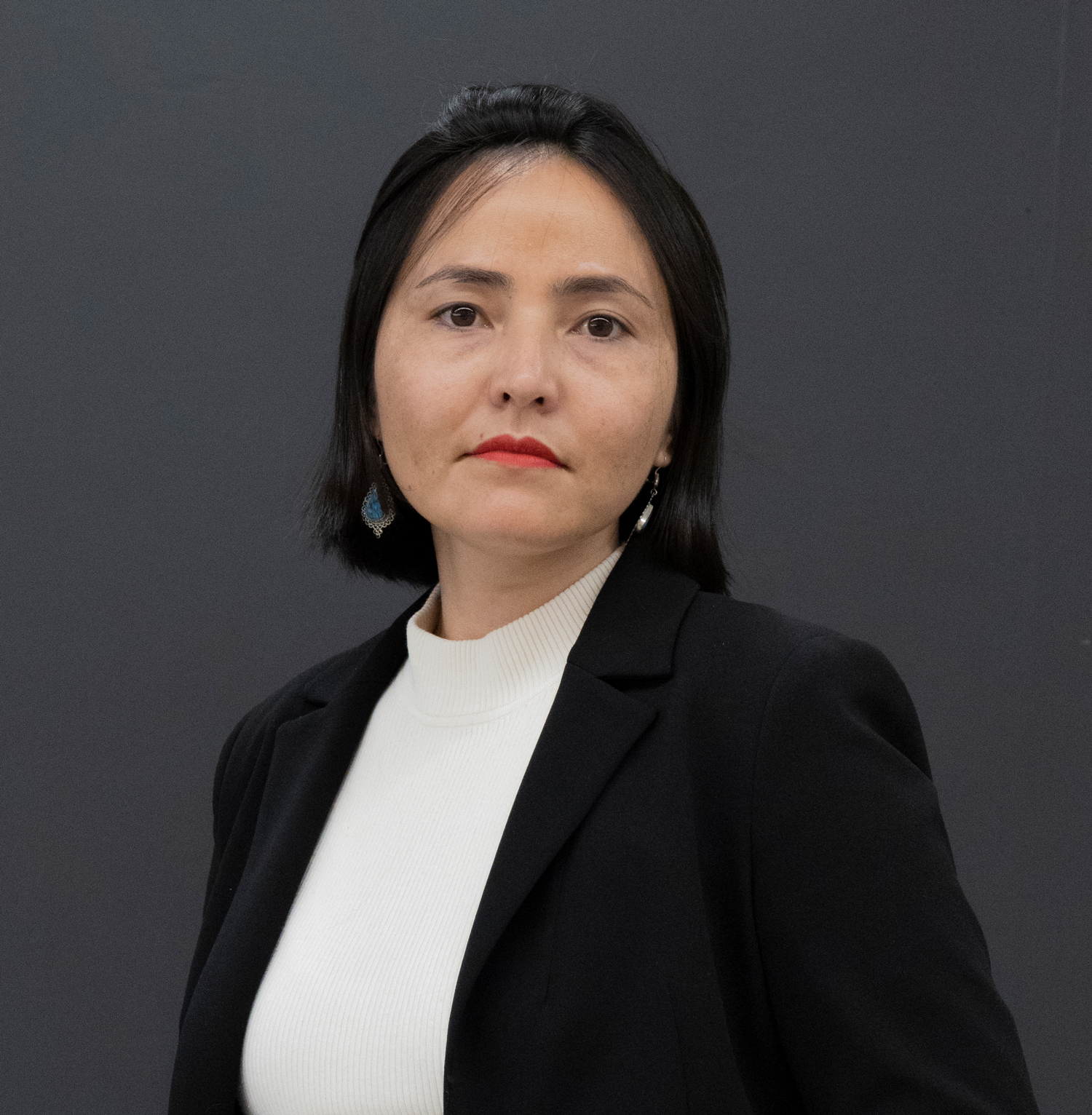
This journey became the focus of my PhD, but in 2021, which was my second year of study, the Taliban returned to power and my plans to return to Afghanistan and teach women and gender studies at Kabul University were shattered.
That August and the months that followed brought the worst mental health crisis I’ve ever experienced. I felt overwhelming guilt for being safe, for living in a country where my rights are protected while witnessing my country and my hopes collapse before my eyes. What could I do?
I remembered: I was a journalist. I knew how to report, how to tell stories.
I had a wide network of Afghan journalists, both in exile and still in Afghanistan. Together, we decided to build a media outlet focused on human rights reporting under Taliban rule.
We had no funding, no seed money. I used my student savings to cover the basics and pay the salaries of journalists inside Afghanistan. Within five months, I was suddenly leading a newsroom in exile, with colleagues risking their lives every day. I had panic attacks, fearing that if any of them were arrested, it would be my fault. I felt paralyzed by responsibility.
Some team members understandably left due to lack of funding. But a few of us stayed, united by the belief that we had a duty to our country and especially to the women left behind. We couldn’t be silent.
Zan Times focused our work on investigative and feature reporting. We also began training women journalists in Afghanistan over Zoom. In 2024, we trained more than 30 women journalists in Afghanistan, as well as a few in exile. Some of them are now working with us, allowing us to report from across Afghanistan. This year, we are training another 30 women journalists. Unfortunately, funding for this project was cut in January 2025 when the U.S. president signed an executive order suspending certain international aid projects. But we continue to run the training, hoping to raise the funds needed to keep it going.
With schools and universities banned for girls, women in Afghanistan no longer have the right to pursue journalism. That means it’s now up to us, those outside, to help train the next generation of Afghan women journalists and support them however we can.
The journalists we work with inside Afghanistan are doing this work under extreme conditions. They use pseudonyms, and only their immediate family knows about their affiliation with Zan Times. They can’t carry press cards; if they were caught, those cards would serve as evidence of a “crime.” The Taliban has outlawed working with exiled media, a deliberate tactic to suppress independent journalism. And although the Taliban suppress all forms of free media, they are especially hostile to women journalists.
One journalist in Kabul was interrogated simply for reporting on women’s mental health. Just four months into Taliban rule, Reporters Without Borders stated that four out of five women journalists in Afghanistan had lost their jobs.
But many haven’t given up. They are still working—underground, anonymously, and often without pay. I’ve had the privilege of working with some of the most courageous journalists I’ve ever met.
Despite all odds, we have reported some of the most important stories out of Afghanistan in recent years. In August 2023, we collected data from 11 provinces that showed an unprecedented rate of suicide among young women as the result of the Taliban policies. That investigation earned us the 2024 Human Rights Press award for the category of media in exile. In August 2024, we uncovered how the Taliban killed a female YouTuber and covered up her murder. We have reported on deeply sensitive cases, including girls imprisoned for violating the Taliban’s dress code who were then sexually harassed and raped in custody.
These stories would not have been possible without our team on the ground—journalists risking everything to ensure that the world hears the truth.
In today’s Afghanistan, you cannot tell a complete story without women journalists. That’s why the Taliban is trying to silence them—forcing them off the air in at least half the country.
Afghan women have not given up. We are still fighting, still writing, still resisting. What we need is support to continue our work.
UPDATE (July 2026)
Last year, when I wrote to this community, I was not sure whether Zan Times would survive.
In January 2025, after US funding cuts, we lost half of our budget. For a small Afghan women-led newsroom in exile, reporting on life under Taliban rule, that loss was frightening. It meant we had to ask ourselves whether we could continue paying Afghan women journalists, publishing stories from inside Afghanistan, and documenting the human rights violations that the Taliban would prefer the world to forget.
Then something remarkable happened.
Through our GoFundMe campaign in 2025, we raised $116,000 Canadian dollars. That support did not only help Zan Times survive the year. It changed the way we understood our future.
We realized that our journalism does not have to depend only on institutions or traditional donors. It can also be sustained by readers, by people who care about women’s rights, press freedom, and the right of Afghans to write their own stories.
That realization led us to a new goal: to turn Zan Times into a reader-supported newsroom.
With that goal in mind, we also designed a paid fellowship for Afghan women journalists. We wanted the fellowship to do three things at once: provide training, offer mentorship, and create paid work opportunities for women journalists inside Afghanistan. At a time when the Taliban has pushed women out of schools, universities, offices, and newsrooms, we wanted to create a space where Afghan women journalists could continue learning, reporting, and writing.
When we opened applications on January 19, 2026, we planned to invite ten women journalists.
Within two weeks, we received 860 applications from Afghan women living in 31 of Afghanistan’s 34 provinces.
The response was overwhelming. It was also deeply moving. Behind every application was a woman who still wanted to work, still wanted to learn, still wanted to report, and still wanted to be part of Afghanistan’s journalism landscape despite the Taliban’s campaign of erasure.
Because of that response, we decided to expand the fellowship to twelve women journalists.
We have now completed our fourth online session with them. The first session was an introduction: a chance to meet one another, explain the goals of the fellowship, and begin building trust. The next three sessions focused on mental health and trauma. We invited experts from different organizations to speak with the fellows about trauma, how it affects journalists, and how they can recognize and respond to its impact in their own lives and work.
This was not an abstract topic for them.
Afghan women journalists are reporting under extraordinary pressure. Many have lost their jobs. Many are working in hiding or under pseudonyms. Many carry the trauma of displacement, threats, censorship, poverty, and daily uncertainty. Some are trying to continue journalism in a country where the Taliban has made women’s public presence itself an act of resistance.
For us, it was important that this fellowship did not begin only with assignments, deadlines, and reporting techniques. It had to begin with care. These women are not only journalists. They are people living through the story they are trying to tell.
Over the next ten months, the twelve fellows will continue learning with us, working with us, and producing journalism for Zan Times. They will receive training, mentorship, editorial guidance, and monthly stipends. Our hope is not only to publish their stories, but to help them remain connected to journalism at a time when so many forces are trying to push them out of it.
This fellowship exists because people supported Zan Times when we were at risk of disappearing.
Now we are trying to build on that support and make it sustainable.
Our goal for 2026 is to welcome 800 monthly supporters. If each supporter gives $10 or more a month, it would cover roughly one third of our annual operating budget. That support would help us continue paying Afghan women journalists, run programs like this fellowship, publish our weekly reporting, and keep documenting life under Taliban gender apartheid.
Afghanistan does not yet have a truly reader-supported newsroom. But at Zan Times, we are ambitious enough to believe it is possible.
We believe it is possible because last year, when we asked for help, people showed up. They helped us survive 2025. Now we are asking you to help us build something more lasting: a newsroom sustained by a community of readers who believe Afghan women deserve the right to tell their stories.
If you want to help us, start by joining our community. It is easy—just sign up for our free weekly updates.
We would be grateful if you consider being a monthly supporter of Zan Times, which is what we really need to keep this newsroom sustainable for the voices of Afghan women.
To learn more, visit https://zantimes.com.
To join us, go to https://zantimes.com/donate.
- Zahra Nader is an Afghan journalist and the editor in chief of Zan Times, an award-winning newsroom in exile that reports on human rights violations in Taliban-controlled Afghanistan. She leads a team of mostly women journalists, both inside the country and in exile. Nader has contributed to both local and international media, including The New York Times in Kabul. She was a 2024–2025 Knight-Wallace Fellow at the University of Michigan and holds a master’s degree in communication and culture from York University in Toronto, where she is pursuing a PhD in gender, feminist, and women’s studies.
- Email: zahra.nader@zantimes.com
ROOM is entirely dependent upon reader support. Please consider helping ROOM today with a tax-deductible donation. Any amount is deeply appreciated. |